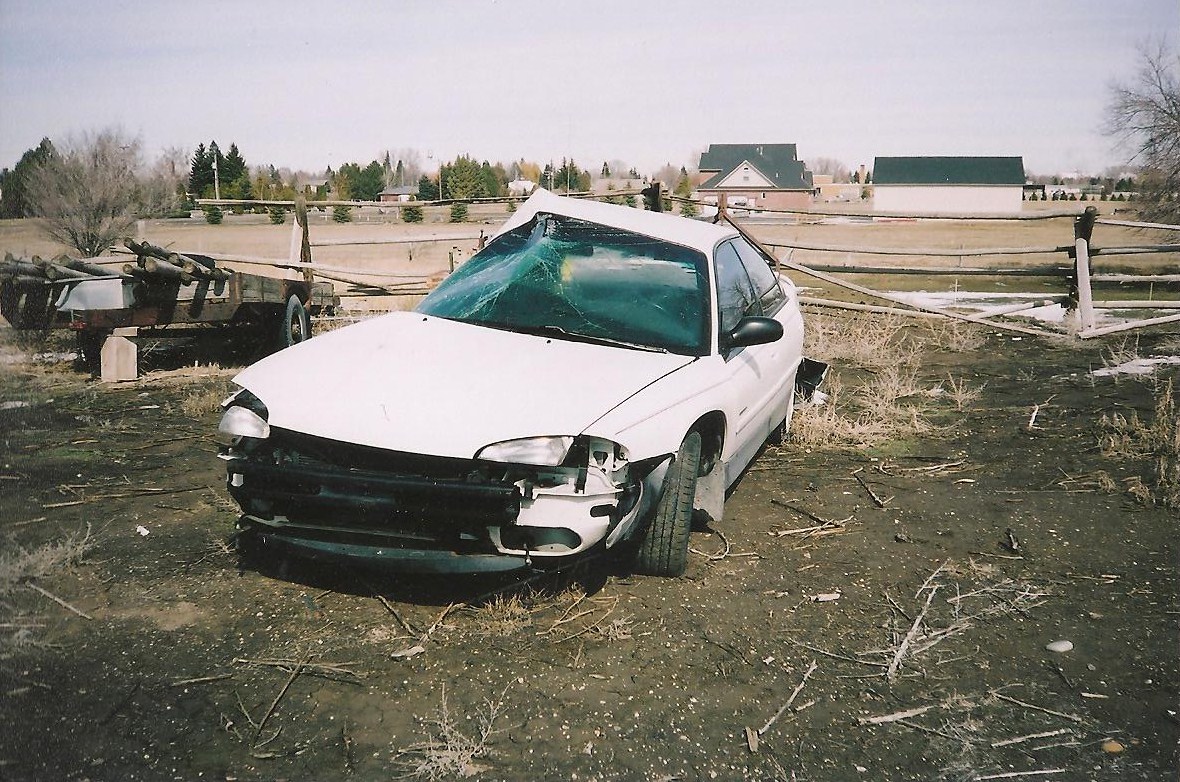
I have been following this for quite some time and am very excited it’s is in the House here in Utah. Here is a link to follow this bill. It is a very important one that requires coaches in amateur sports to pull an athlete with a suspected head injury and keep him out until his Dr. give’s the ok to play again. It also requires them to notify the parents. I can only ask that you research all the problems that can happen when a child just shakes off the symptoms and returns to the game. check out http://www.biau.com or http://www.brainline.com to find out more. It can be life changing and I am so happy that they are making people more aware and getting the kids checked out before they continue the game. Happy Bill making! http://le.utah.gov/~2011/htmdoc/hbillhtm/hb0204.htm
Treating an Injured Brain Is a Long, Uncertain Process
•January 11, 2011 • Leave a CommentThis is all hitting a little close to home. I know all to well what she is going thru. I am following her recovery and praying for her daily.
By LAWRENCE K. ALTMAN, M.D.
Published: January 9, 2011

Samantha Sais for The New York Times
Dr. G. Michael Lemole, left, and Dr. Peter Rhee were hopeful about Gabrielle Giffords’s recovery.
Related
-
At Giffords’s Synagogue, Prayers for Recovery (January 10, 2011)
-
Evidence Points to Methodical Planning (January 10, 2011)
-
Times Topic: Gabrielle Giffords
Trauma surgeons spent two hours on Saturday following an often-performed drill developed from extensive experience treating gunshot wounds in foreign wars and violence in American homes and streets. On Saturday, that drill really began outside a supermarket, with paramedics performing triage to determine the seriousness of the wounds in each of the 20 gunshot victims.
Ms. Giffords, 40, was taken to the University Medical Center in Tucson, where, 38 minutes after arrival, she was whisked to an operating room. She did not speak at the hospital.
As part of the two-hour operation, her surgeons said on Sunday, they removed debris from the gunshot, a small amount of dead brain tissue and nearly half of Ms. Giffords’s skull to prevent swelling that could transmit increased pressure to cause more extensive and permanent brain damage. The doctors preserved the skull bone for later replanting.
Since surgery, they have used short-acting drugs to put Ms. Giffords in a medical coma that they lift periodically to check on her neurological responses.
They said early signs made them cautiously optimistic that Ms. Giffords would survive the devastating wound.
“Things are going very well, and we are all very happy at this stage,” Dr. Peter Rhee, the director of medical trauma at the hospital, said at a news conference.
Dr. G. Michael Lemole Jr., the hospital’s chief of neurosurgery, was more cautious. “Brain swelling is the biggest threat now,” Dr. Lemole said, “because it can take a turn for the worse at any time.”
Such swelling often peaks in about four or five days, then begins to disappear.
The doctors said that it was far too early to know how much long-term functional brain damage, if any, Ms. Giffords would suffer. They also say they will carefully monitor her over the next few days as she faces a number of potential complications, like infections, that can hamper her recovery. Full rehabilitation could take months to years. Long-term complications could include seizures.
The optimism expressed Sunday was based on Ms. Giffords’s ability to communicate by responding nonverbally to the doctors’ simple commands, like squeezing a hand, wiggling toes and holding up two fingers. The tests are part of a standard neurological examination after head injuries. In Ms. Giffords’s case, the doctors were encouraged because the simple tests showed that she could hear and respond appropriately, indicating that key brain circuits were working.
“If she’s following commands, that’s great and a very big step toward recovery,” Dr. Eugene S. Flamm, chairman of neurosurgery at Montefiore Medical Center in the Bronx, said in an interview. Dr. Flamm is not involved in Ms. Giffords’s treatment.
Functional neurological recovery from a gunshot wound depends on a number of factors, including the specific area of the brain that is injured, the number of bullets, their trajectory and velocity, and luck.
Ms. Giffords was shot once in the head, according to Sheriff Clarence W. Dupnik of Pima County, Ariz., and the doctors who treated her said that tests showed the bullet did not cross the geometric center line dividing the brain’s left and right hemispheres.
“That’s very good because bullets that affect both hemispheres have a much higher mortality because the swelling affects both sides,” said Dr. Flamm, who has treated many gunshot wounds in his career, including 25 years at Bellevue Hospital Center in Manhattan, 11 years as chief of neurosurgery at the University of Pennsylvania in Philadelphia and 11 years at Montefiore.
In traversing the left side of Ms. Giffords’s brain, the bullet went through what is the dominant side in about 85 percent of people, whether they are right- or left-handed, Dr. Flamm explained.
“It sounds simple to raise fingers and squeeze hands,” he said, “but the ability to do it is a very good sign in a brain-injured patient because it shows that the dominant hemisphere was not knocked out.”
The doctors in Tucson did not cite the bullet’s trajectory — that is, whether it entered at the top of the back of the skull and exited at a lower point or whether it went straight through.
If the bullet went through the visual area in the occipital part of the back of the brain, it could affect the right side of Ms. Giffords’s peripheral vision, Dr. Flamm said, adding, “It is hard to piece that together without more information.” Ms. Giffords is unable to speak because she is connected to a ventilator and unable to open her eyes, which doctors have covered with patches.
It is usually several weeks before doctors can fully evaluate cognitive function in a patient who has suffered a gunshot wound to the brain, and the body has a significant capacity to compensate for serious injuries.
Although Ms. Giffords’s ability to follow commands is encouraging, her doctors said that it would take several weeks to know what her recovery would be. That is a caveat that Dr. Flamm well understands. “I can understand the impatience of wanting to know it now,” he said. “But even if I wanted to know and examined her myself, I wouldn’t be able to answer that question at this stage.”
A version of this article appeared in print on January 10, 2011, on page A11 of the New York edition.
2010 in review
•January 2, 2011 • 1 CommentThe stats helper monkeys at WordPress.com mulled over how this blog did in 2010, and here’s a high level summary of its overall blog health:

The Blog-Health-o-Meter™ reads Wow.
Crunchy numbers

A helper monkey made this abstract painting, inspired by your stats.
The Leaning Tower of Pisa has 296 steps to reach the top. This blog was viewed about 1,000 times in 2010. If those were steps, it would have climbed the Leaning Tower of Pisa 3 times
In 2010, there were 17 new posts, not bad for the first year! There were 11 pictures uploaded, taking up a total of 4mb. That’s about a picture per month.
The busiest day of the year was March 24th with 103 views. The most popular post that day was squishy green earplugs.
Where did they come from?
The top referring sites in 2010 were facebook.com, mail.live.com, mail.yahoo.com, webmail.earthlink.net, and webmail.c.earthlink.net.
Some visitors came searching, mostly for ourheadbangersball, ourheadbangers, http://www.ourheadbangersball.wordpress.com, and brenda speech therapist.
Attractions in 2010
These are the posts and pages that got the most views in 2010.
squishy green earplugs March 2010
3 comments
About our headbangers ball February 2010
9 comments
speech therapy February 2010
16 comments
…….and they lived happily ever after. March 2010
17 comments
was it really “happily ever after”? March 2010
6 comments
Coping with Strategies
•December 3, 2010 • Leave a CommentJust wanted to pass this along. For those of you who follow my blog, the Christmas party’s have gone well this year. I didn’t say a single word during any speeches this year! Victory! LOL! I rest a lot during the day before the party and I have a plan. Dan give’s me certain ‘looks’ if I start to stray and then I just change the subject. Strategies are so important.
Brain Injury, Behavioral Challenges, and the Holidays Carolyn Rocchio, BrainLine

Ever since his TBI, my husband is sometimes a little inappropriate with his jokes and conversations. I can tell others feel embarrassed. And frankly, I’m embarrassed, too. How do I deal with this, especially with the added pressure of holiday gatherings?
The holidays can definitely come with more stress and more social challenges. As you probably know, when the part of the brain that controls a person’s ability to self-monitor and inhibit inappropriate behavior is damaged, it can lead to difficulty managing social interactions. Your husband may also lack the ability to use feedback, such as reading other people’s facial expressions.
Rehearsing or role playing before attending a party or holiday gathering can be helpful. Practice some cueing strategies to use if your husband starts to say or do something that could become embarrassing to you or others. For example, you could use a gesture such as a raised palm to alert him to stop.
It also helps to discuss, well in advance, what your expectations are and act out a scene you might encounter. For example, New Year’s Eve parties can be fun, but they usually include alcohol and the expectation of a midnight kiss. You may want to rehearse your husband’s response if he’s offered a cocktail — “No, thank you. Since I was injured, I’m using medications that don’t mix with alcohol.” As for the midnight kiss, explaining and rehearsing proper etiquette before the party will help, especially since other party guests may be jovially hugging and kissing others. Unless he fully realizes that it is customary to kiss and be kissed “like a friend” on New Year’s Eve, he may take offense. Rehearsal and reminders during the evening will hopefully lead to a Happy New Year.
Plaque
•November 30, 2010 • Leave a CommentI love thinking about the future. I like to lay in bed or sit quietly on my couch and think about the future and all the hope and promise it brings. I often think of my three wonderful children. I’m sure you do the same thing. Our children are wonderful and yours, like mine, are so incredibly amazing. The possibilities are endless. They are capable of anything! It’s so fun to watch them grow and become themselves. Love it!
So while I am daydreaming about what the future will bring, my mind often goes to who my kids will find as their life partners, will I get grandchildren? (don’t worry kids…no pressure here) I want somebody to love me just because I’m grandma. I want to enjoy and spend the day with my kids and their kids. I want to look into their eyes and love and get to know them. I want to hold grand-babies, cook huge turkeys at Thanksgiving, be surrounded by my family at Christmas, enjoy hiking, camping, fishing, and trips to see kids wherever they decide to be in this world. I want to wake up in the morning and know that I am alive and breathe deep and begin another day, thankful to be alive. I want to end the days with sunsets and peacefulness.
Then the doomsday thinking arrives. Damn it. Why does it always have to creep in. Why do I let it. I guess you could call me a realist. I appreciate the bluntness of reality. No secrets, just truth. I can deal with that. Eventually. Cover it up, side step it, go around it, avoid it, add fluff, candy coat it, all of that leaves me confused. Lie to me about it and just see if you get away with it. Just give me the facts and I will figure it out and deal in my own way.
Here it is…….the facts. The fact that someday I may have Alzheimer’s. A word I finally had to learn to spell forwards and backwards because its become a vocabulary word that’s used a lot at my Dr. appointments and at home and in my head and in my daydreaming of my future. “It could happen sooner than later” said one Dr. She went on to say that if I don’t take care of myself I will be just fine, in my Alzheimer’s state of mind, but that my family would not be. They would be dealing with a mom that doesn’t remember who they are, a wife that doesn’t remember the lifetime of love shared with her husband, family and friends. No memories of the kids, spouses, grandkids, Thanksgivings, Christmas, weddings and other special days. Even a memory of the not so good days would be a highlight at this point. I would like to remember how to drive, navigate directions, and how to get dressed and to shut the oven off when I’m done with it. But mostly I just want to remember my family.
According to the Alzheimer’s Association, nearly half of all people age 85 and older will develop Alzheimer’s disease — a degenerative brain disorder that currently has no cure. As our aging population booms the Alzheimer’s epidemic will increasingly become a critical concern, not just for the elderly and their families, but also for society at large. These numbers are increasing as 2-3 out of every 10 soldiers returning from Iraq have a brain injury. Not to mention the increasing numbers of people sustaining a head injury every year. These facts kinda scare me.
Plaque. It’s that fuzzy stuff that you find on your teeth in the morning. It builds up on your teeth overnight. Your mouth is not the only place that plaque builds up. You are actually born with it. Small amounts are found all over in your body, on your teeth, in your veins, in your brain. As we get older, that plaque builds up, layer on top of layer. We can take ourselves to the dentist to have it removed from our teeth, but unfortunately we can’t do that with our brain or our veins. All we can do is take care of ourselves. Eat healthy. Low fat diets that include lots of dark-colored veggies are best. Exercise is wonderful. Cognitive brain exercise is a must. It all helps avoid Alzheimer’s. But life happens. I love a nice fatty hamburger sometimes. I have been known to down a couple or more, chocolate truffles with wine while watching ‘I Love Lucy’ reruns. Instead of exercising, I lay around or watch movies. So the plaque builds up in my body. Then sometimes things happen that are out of my hands. When I got hit in the head with a big Ford truck the slimy, thick, fuzzy plaque immediately started to cling to the neuron pathways in the injured section of my brain, almost as fast as it was bleeding inside my head. (sorry, that’s kind of gross). It did that to all of us in the car that night.
Plaque build up, wherever it is in your body, leads to complications later in life such as cavities, heart attacks, dementia and many other things. This plaque has also been linked to the cause of Alzheimer’s. As this plaque builds up on your neuron pathways, it clogs up the system. Prevents it from working right. Think of your brain as the cell phone system of the world. Picture in your mind all the connections that happen all over the world and how important they are in getting vital information from place to place. Now think of a broken satellite or a cell phone tower covered in ice,fog and snow. The connection gets weaker and eventually will be lost.
Last week I posted an article of a study about linking head trauma to Alzheimer’s. Today I received another article. Doomsday is here. They linked TBI to Alzheimer’s. It’s a fact. I am at a high risk for Alzheimer’s. I’m not happy with this news, neither is Dan, or the kids or the rest of my family and friends. But I can deal with it. That is why when you ask me if I would like another piece of pie, I will decline, if I have one at all. That is why instead of watching that movie, I will be outside exercising, or if the weather is bad I will be downstairs working that treadmill or the Total Gym(Chuck Norris and Christie Brinkley, get out of my way) as hard as I can. I will continue to log all my calories and exercise into my Droid application daily. That is why I have thrown away my deep fat fryer. That is why fatty foods have been banned from my house. That is why I hiked over 100 miles this summer and lost 20lbs and I am going to lose more. Just waiting for those cross-country ski’s from Santa/Dan. (Oh Santa, I also need a new pair of snow pants.) That is why I put up with major pain after exercising. That is why I sometimes cry when I am daydreaming about my future. I want to really be there in my future, mind and body. I want to remember what it felt like to see my children graduate from college and join them in the joy. I want to remember wedding days, I want to remember what it’s like to hold your brand new grand baby and that wonderful new baby smell. I want to remember my 50th wedding anniversary and hopefully many more after that. I want mostly to remember the faces of those I love and why and how I love them. I want to remember the smell of Dan’s cologne when he kisses me. That is why I am totally changing anything from my past of how I used to eat and exercise. Hopefully changing my future in the process. It’s a whole new look at my lifestyle. Sound easy? Good, cause it’s not. But I’m doing it.
I also want to share the facts with you. Here is the article I have been following. If you don’t have time to read the whole thing, please at least read the first paragraph.
Can Head Trauma Cause Alzheimer’s?

“One of the most robust environmental risk factors ever identified—and most consistently identified—for Alzheimer’s disease is head injury,” says Dr. Samuel Gandy, Associate Director of the Mount Sinai Alzheimer’s Disease Research Center, in Big Think’s recent expert panel about the disease. This finding has grave implications for those who have suffered brain injuries, and, in particular, military veterans returning from Iraq and Afghanistan.
”Traumatic brain injury is considered the signature injury of these wars,” says Dr. Gandy. A 2008 report by the Army echoes this, estimating that 10 to 20 percent of soldiers and Marines leaving Iraq and Afghanistan have traumatic brain injury (TBI). And these numbers may be low—according to an ongoing series by ProPublica, many brain injuries sustained on the battlefield go undiagnosed.
A single severe incident of head trauma—as could result from a concussive explosion—can increase the risk for Alzheimer’s disease, says Dr. Gandy. As well, repetitive head injuries can lead to similar degenerative brain diseases such as chronic traumatic encephalopathy.
While the mechanisms are not precisely known, head trauma leading to dementia appears to create havoc in the brain that tears synapses, says Dr. Ottavio Arancio of the Taub Institute for Research in Alzheimer’s disease at Columbia University. Within hours or a head trauma, the plaque beta amyloid—one of the well-studied hallmarks of Alzheimer’s disease—can be found in patients. This material, the beta amyloid, is in the brain since birth in small amounts, and largely without effect. “However,” says Dr. Arancio, “something happens in the disease and this balance, the communication within cells, is broken and there is an accumulation of this material.”
Some research points to a genetic component to Alzheimer’s disease making one more susceptible to the consequences of trauma. Although researchers have not found a single gene that causes Alzheimer’s disease, the allele ApoE 4 on chromosome 19 is linked to an increased risk for the disease. A study of boxers who possess ApoE 4, rather than another allele in the ApoE genotype (1, 2, 3), were found to have an increased severity of neurological defects after their time in the ring.
More Resources
— “Mild Traumatic Brain Injury in U.S. Soldiers Returning from Iraq.” New England Journal of Medicine.
— “Repetitive Mild Brain Trauma Accelerates A Deposition, Lipid Peroxidation, and Cognitive Impairment in a Transgenic Mouse Model of Alzheimer Amyloidosis.” Journal of Neuroscience.
— “Brain Wars: How the Military is Failing its Wounded.” ProPublica
— “TBI Could Be the Next Agent Orange,” Big Think interview with Paul Reickhoff, founder of Iraq and Afghanistan Veteran of America
Researchers probe brain-injury link to Alzheimer’s disease
•November 17, 2010 • Leave a CommentThis article was taken from Brainline.org. I have heard and been told by Dr’s that, due to my Traumatic Brain Injury, I need to take care of myself or could have Alzheimers sooner than later. This is very scary to me. I hope they find a way to help me prevent it. I am doing all I can with exercise, which is good for the brain, and decreasing my fat intake, which is also very good. It reduces the plaque build-up on your nuerons in your brain. So happy for new studies! Yay!
Dr Willie Stewart will lead the new research
Alison Camspie
The link between head injuries and Alzheimer’s Disease is to be examined by Scottish researchers in a ground-breaking new study, thanks to a donation from the US.
The effect on brain pathology of head injuries suffered playing rugby and in assaults will be the subject of a study by a research team at the Southern General Hospital in Glasgow
It has received £370,000 from the American National Institutes of Health to carry out further analysis on the hospital’s world-renowned bank of brain tissue, which has been compiled following post-mortem examinations in the west of Scotland over several decades.
It is hoped that by establishing the links between the head injury and Alzheimer’s, a greater understanding of the degenerative disease – which affects around 700,000 people in the UK – will be gained.
Almost one-quarter of people over 80 develop the condition. One in 20 of those over 65 develop the illness.
Study leader Dr Willie Stewart, a consultant neuropathologist at the Institute of Neurological Sciences at the Southern General, said: “There is a known link between people who have had a head injury and those who later develop dementia, and the rate is roughly double [the population average].
“We have been interested as to why that is.
A clue to the pathology of Alzheimer’s in those with a head injury might help us find why dementia develops Dr Willie Stewart, neuropathologist
“We have been looking at samples of brains of those who have survived many years after a head injury, and the pathological development is similar to Alzheimer’s.
“If we can get a clue as to the pathology of Alzheimer’s in those who have had a head injury, that might give us a clue as to why other dementia develops.”
It is already known there are shared patterns of brain change between those who have suffered a head injury and those with Alzheimer’s.
Certain proteins or plaques that are normally found in the brain tissue of those with dementia are present in roughly one-third of those who have suffered a head injury.
A loss of nerve cells and inflammation is also common in both groups.
It is not clear whether these changes take place slowly over decades in those with head injuries, or if they are more sudden changes later in life, Dr Stewart said.
He added that another area of interest to the research team was the fact that the top five causes of death in the UK were found at much higher rates in those who have at some time suffered a head injury.
“That event probably becomes a disease that you carry with you. Personalities change, your whole cerebral function and mental state can change, people may end up with memory problems,” he said.
“People may take more drink, there may be a social decline, or difficulty keeping a job.
“These are factors that are influencing the long-term pathology of the brain,”
In 1998, former Celtic footballer Billy McPhail lost a legal claim that his pre-senile dementia had been caused by heading heavy leather footballs during his career.
McPhail, who died in 2003, had attempted to prove his condition stemmed from his work so that he would qualify for an industrial injuries disablement payment.
Dr Stewart said the association between head injury and long-term effects on the brain had become a hot topic in the US, where links between playing American football and suicide rates had been examined by Congress.
A post-mortem examination on US college football player Owen Thomas, 21, after he committed suicide, found that he was suffering from the early stages of a brain disease linked to repeated head trauma and often seen in older athletes.
His brain tissue showed early signs of chronic traumatic encephalopathy, which can be caused by repeated blows to the head and can cause erratic behaviour, depression and impulse control.
Mr Thomas was captain of the team at the University of Pennsylvania, which has a long association with Glasgow’s Institute of Neurological Sciences.
Dr Stewart added: “We are very interested in athletes’ brains, such as rugby players.
“We have been looking at head injuries forever, yet we know so little about them.
“It is incredible that we don’t know more.”
“It is a huge problem but we are still no exactly sure how it comes about. In head injuries, we have a potential link.”
Alive, awake, alert, enthusiastic!!
•November 8, 2010 • 2 CommentsThere has been a lot of arguing in my house this summer. This is strange. I mean, we all have arguments. I am positive you have experienced a few yourself. But this has been different. Dan and I argue, Katie and I argue, Jon and I argue. Shellie is really the only one immune because she is so far away, but we would still argue and she did not know how to deal with such a passive mom. Anybody who knows me, knows I am not very passive by nature. Truthfully, all this fighting sucks. I hate it. It’s uncomfortable. I feel like nobody is listening to me, like I’m not important. Even when I say something, it feels like maybe they didn’t hear me. They ignore me. That no matter what I do, I start an argument. It’s been really hard. I thought things were getting better. This feels worse. Admittedly, it’s my fault a lot of the time. I am so oblivious to social cues from family and friends that I will just be going along my happy way, thinking I am following the flow only to find out I have totally pissed somebody off. Oops! You seriously have to take my hand and walk me through these.
Arguments just confuse me. Most social situations are difficult for me. It’s really not fair fighting with somebody who has a Traumatic Brain Injury. But please don’t let that stop you. We need the mental exercise. My memory sucks, but when I am emotional is gets worse. I won’t even remember what we are arguing about 2 minutes into the heated conversation. It’s kind of comical but I really have no idea what starts them all. For example; I ask Katie to clean her room, she argues, I forget what I asked her to do, which leaves me helpless on knowing how to render the situation. By this point I am so very confused and can’t think anything through or find a solution to work things out. So then I get even more frustrated and angry. Very angry. Then the argument has escalated into a nonsense filled, hurtful tirade. Nothing gets worked out and it just builds and builds and explodes more the next time. Then I leave to take a long break. It takes twenty minutes for the brain to change emotions, so I take those twenty. Then I am ready to try again.
I admit my house is usually loud. If you have a problem, voice it. Talk about it. Get it out. I would rather have an argument with Dan in front of the kids than behind closed doors, so they learn that we eventually work it out. And sometimes they learn that I am right and sometimes Dan is right and that sometimes you just need to know when to say sorry, drop it and just forget it and when to stick to your guns. Am I right? Anyway, we have some pretty loud discussions in our house when needed. But this summer has been more than normal. Dan won’t listen, Katie won’t listen and I am just frustrated and confused.
In August, I heard my Katie singing this song in her sweet little voice, “Alive, awake, alert, enthusiastic!”. It finally dawned on me what has felt so different in my house this summer. I have my voice back. My recently passive self is fading away. Where I would have usually kept quiet, I am deciding to say something. If you have been around any disabled persons you may have heard them talk about not having a voice. We just get taken care of. People don’t think that we can make good choices or have anything good to say. Well, have I got news for you! We have a lot of important things to say and a lot of great input. Have you ever heard the quote “Nothing about me, without me” ? Don’t leave me out of conversations. Don’t avoid talking about certain things around me. And especially, DO NOT make decisions about me and my family without talking to us first. You know, like “well, they have a lot of stuff going on at their house, lets not bother them”. Which means you exclude us. That’s not right or fair. Treat me the same. I will let you know when I can’t handle something or when I need something. I have a voice. And I am going to use it. Give me the opportunity to use it. Respect me.
The past couple of years I have not been functioning at such a level that I really could use my voice, so Dan used his for me, or just made all the decisions. He had too. I was either working, in too much pain to deal, or sleeping. Katie had to grow up fast and with out a mother always available. But watch out, cause I am Alive, awake and enthusiastic! (ok, sometimes not so enthusiastic, but I’m working on that) With quitting work, all the therapy and exercise, diet and taking better care of myself I am really alive again. I am me again, a different me, but still a really great me! I am a wife, a mom, a sister, a friend, all those important things. And, I am going to tell you about it! How I feel about it and what I think about it.
I have my voice back. It has taken a lot of adjusting for all of us. It has taken some getting use too. Dan and I discuss decisions again instead of him just making them for me. I am a mother to Katie, Jon and Shellie again. Katie and her ten-year old self has had to learn to listen to me all over again instead of just taking care of herself. This summer when I would tell her to do something or just even being a normal parent, she would resist and do it her way or not at all. This was new territory for her, for all of us. She couldn’t believe I was actually telling her what and how to do things and being more involved with her. Often she would cry for daddy or just ignore me completely. It took lots of work and the whole freaking summer, but we did it. We all do a very good job working together again. I repeat a lot of things and forget what I just told her to do a lot and I ask things over and over again. But the family knows I do this and they respect me and my voice. It feels sooooooo good to finally be heard again. To be heard and listened to, really listened too because I make sense now. If I get confused, I say so. If I need a break, I say so. I am enjoying my new voice.
I have won this battle, but not the war. But I will never, never, never give up!
Fact Sheet: Traumatic Brain Injury
•September 16, 2010 • 2 CommentsBeen crazy busy, but doing good. Haven’t had time to blog. So for today I inserted this article from NPR. Please read it. I pray for the soldiers daily. Please pray with me.
September 8, 2010 What Is It? And How Does It Differ From A Concussion?
Traumatic brain injury, or TBI, is a sudden trauma to the brain caused by force. A severe TBI can leave a person almost incapable of functioning. But even a mild TBI — a concussion — can lead to a range of debilitating symptoms: headaches, balance problems, hearing problems, lack of self-control, mood changes, ringing in the ears, problems sleeping and memory loss. While most people recover from a mild TBI, it can take months, even years.
According to the Centers for Disease Control and Prevention,”approximately 1.7 million people sustain a traumatic brain injury annually” in the U.S., and “the majority of TBIs each year are concussions or other forms of mild TBI.” For some basics on the science behind TBIs, see NOVA Science Now’s “Brain Trauma” video and website.
The brain injuries sustained by soldiers serving in Iraq and Afghanistan are most often caused by explosives. See ProPublica’s graphic showing what happens to the brain during and after a blast.
How Many U.S. Soldiers Have TBI?
The exact number is hard to pinpoint. The Pentagon says about 115,000 soldiers have mild TBI, while the RAND Corporation study, Invisible Wounds of War, suggests the much higher number of 400,000 total TBIs, the majority of which are classified as mild.
How Is TBI Diagnosed?
Diagnosing TBI can be hard. Symptoms of moderate to severe TBI can be obvious — extended loss of consciousness and severe neurological disorders — but diagnosing a mild TBI is trickier, especially during combat. Often soldiers don’t even realize they have a mild brain injury after a blast. In some cases, combat medical records are lost or destroyed in theater.
And NPR found that “the military’s doctors and screening systems routinely miss brain trauma in soldiers.”
The military uses two basic tests to diagnose the injury: The first, the Military Acute Concussion Evaluation, or MACE, is a survey taken immediately after an injury. NPR and ProPublica found that often soldiers learn to cheat on this test because they want to return to their platoon. The second, Automated Neuropsychological Assessment Metrics, or ANAM, “failed to catch nearly half of all soldiers who had suffered a concussion,” according to a recent unpublished study obtained by NPR and ProPublica. Lt. Gen. Eric Schoomaker, the Army’s top medical official, recently testified in Congress that results from the test are no better than a ‘coin flip.'”
Another consideration in diagnosing TBI is its comorbidity with PTSD. In a response to NPR and ProPublica, Gen. Peter W. Chiarelli, the Army vice chief of staff, said it was a mistake to focus solely on TBIs, since many soldiers are also suffering from post-traumatic stress, or PTS[D], a debilitating psychological wound that can be caused by the intense terror of being involved in a roadside blast. He said the military was diagnosing and treating soldiers suffering from both wounds.
See a timeline tracking the effort to diagnose and treat TBI.
How Is TBI Treated?
Treatment varies widely. Although NPR and ProPublica found that regular and consistent cognitive rehabilitation therapy — techniques to compensate for decreases in mental function — benefited several veterans, this type of treatment is rarely available through military medical care. Many soldiers have sought rehabilitative treatment at private facilities. For each of the three soldiers profiled in FRONTLINE’s The Wounded Platoon, the most common treatment given for their diagnosed TBI was pharmacological.
There is some hope that treatment in hyperbaric oxygen chambers might aid in recovery. A study on this therapy gets underway in 2011 and will be conducted at five U.S. bases by the Defense Centers of Excellence for Psychological Health and Traumatic Brain Injury.
The most common way to prevent chronic TBI is to rest after receiving an injury to the head. The Pentagon recently released a new policy for the treatment of TBI, which includes a mandatory 24-hour rest period after a blast, and a complete neurological assessment for soldiers who have had three concussions. If a soldier with TBI is not taken out of theater to properly recover, any additional brain injuries can exacerbate the damage. Yet, as noted above, some soldiers may not realize they have TBI, or they brush off symptoms in order to rejoin their platoon.
From NPR, ProPublica and Frontline reporting.
Anniversary
•July 2, 2010 • 1 CommentOn Tuesday Dan and I celebrated our 20th Anniversary. It was a very special day. Of course. We work really hard on our marriage and this 20 years means so much to us. We are best friends and lovers. We really enjoy being with each other. We sent Katie to a friend’s house and I made grilled baguette bread with olive oil, Greek topping including peppers, clamata olives, feta cheese, etc…I also had some chilled shrimp and cocktail sauce, a side of artichokes and I dug out the wine glasses we got from the wedding suite the day we were married and filled them with red wine repeatedly throughout the night. We just sat and talked about us and the past 20 years and our busy day. It was wonderful. Then we watched a couple re-runs of M.A.S.H. and called it a night. 😉
When I was diagnosed with my TBI I was devastated. So was Dan. At the same time we were relieved to finally know what was going on. I immediately got on the internet and found out all I could about my diagnosis. I read books and got involved with a support group. We got all the members of our family on board, including extended family. Things were going to be ok I thought, but there was one lingering piece of information that I kept finding where ever I went for my information. The divorce rate for survivors of a TBI was 78%! What the hell! I didn’t like that at all. It broke my heart. I became one worried girl. One poor girl in our support group was going through a divorce, her husband said it was because of the TBI! I couldn’t imagine my life with out Dan. Especially now, who would want me with all my baggage. I would end up alone I feared. Dan and I talked about this over and over. Screw the statistics. We are going to try just that much harder to make it.
Many things strain a marriage. Many more things add to the strain after a TBI. The caregiver or spouse has to take on so many more responsibilities. What the survivor can’t do the family ends up doing. Lots of TBI survivors can’t work, like me, so it’s up to the spouse to provide for the family and TBI rehabilitation is one of the most expensive treatments out there. Dan not only provides for us but he also makes sure I have all the treatment I need, plus anything else I need. There is also the added stress of moodiness, forgetfulness, depression and limited awareness of injury related changes. So, like any marriage, it’s tough sometimes.
Recently, Thank God, I received my newsletter from the Brain Injury Association Of Utah. (which is what I referenced for this blog) On the front page was an article titled, The Truth About Divorce After Brain Injury. It immediately caught my attention and I couldn’t put it down. What a great article. I found new information and relief all in a one page reading. The article states that the VCU, Virginia Commonwealth University recently did a study about the high divorce rate among TBI survivors. They found that the studies were old and poorly done which included ‘misleading and negative information’. The old study was done in Europe ‘where the social and legal system is different that the U.S.’ VCU conducted new studies and found out that; “Divorce rates after brain injury may, in fact, be much lower than divorce rates for the general population’ Yay!!!! I was so excited. ‘While some spouses report more stresses and marital troubles post-injury, some report connecting with each other in new, positive ways as they face injury-related challenges together.’ And that is exactly what Dan and I were experiencing. Even though my TBI adds some stress (ok, ok, a lot of stress sometimes) to our lives, we have stepped up to the challenge. Most importantly we have learned to laugh about it more, relax more, enjoy life more. Dan even teases me about being “slow” and that’s ok with me. Those of you that know him know he has a great and quick sense of humor. He is so good at making me laugh when I really want to cry.
Dan has promised me that he’s not going anywhere. I know he won’t. He’s not that kind of guy. He is standing right here beside me through all of this. (i am bawling so hard right now I can hardly read the words on the screen) He is an amazing man. I am soooo blessed and lucky to have him. Thanks Dan for everything you do for me. As for the kids, I know they also feel the same way. Thanks guys. You are the best kids ever! We are in this together and will learn to get through it the best we can and with a smile on our face. All while having a ball.
silent epidemic
•July 2, 2010 • Leave a CommentOops. Found this one in my editing. Thought I sent it months ago.
We went out to dinner with Dan’s work. There were probably 25 people there. I only see these people every once in a while. Some are friends and some are just acquaintances. One we don’t get along with at all. There’s always one isn’t there. The restaurant was very full, busy and loud. Things were fine for a while. But I know its coming. Sure enough. About halfway through dinner…..Overload. First I notice that I can’t understand what the person next to me was saying. “What was that?” I say, “excuse me”, “I can’t hear you!.” So she repeats it again, I can hear her, I just can’t understand her. Then I notice I have a killer headache. I smile and try to act like I am involved and listening. I turn and try to fake the next conversation and try really hard not to say something dumb. People’s lips are moving as they talk to me but I am so00000000 not understanding a word they say. My head is starting to spin. I can’t breathe. My hands start shaking. I want to scream. I stand up and whisper to Dan “I need to get out of here, it’s too loud.” Wow, so embarrassing. I try not to think about it as I head to the bathroom. It’s snowing like crazy outside tonight so I am stuck inside with the smelly bathroom. Oh well. The door shuts behind me. No body else is in here. It’s cool and quiet. Thank God. I take deep breaths and clear my head. I couldn’t meditate right now if you paid me. So I just work on clearing my mind. Pushing away the thoughts of embarrassing Dan and myself by practically running out of the banquet room. Just five minutes is all I need. Better. I hold my head up high and find my way back to our table. Just in time for Charlie’s speech. I don’t make eye contact with anyone. I just go on like everything is fine. Maybe no one noticed. I am sure they did. Everybody watches the boss’s wife.
There’s nothing I can do about it. It’s just how I am now. My brain decides its had enough and if I don’t take care of it then I start to feel the side effects. I am not faking it.
The next day Dan says that one of the board members called to see if I was ok. Really I am, kind of. That much noise and stimulation always makes my head buzz for a few days. A lot like a hangover. The fun is over but the effects last for a while. I just take lots of breaks and avoid similar situations for a couple of days and it will wear off. Then I’m good. I am so embarrassed that somebody noticed. I am married to the boss and I feel like I embarrass him too. Now I am really upset and crying. Glad that somebody cares though. People do tend to slide themselves neatly into slots of how they deal with me. There is genuine caring, indifference, ignorance, etc…. I just try to surround myself with those who really do care. Shrug off the others, sometimes have a good cry and then just go on. Lift up my head, put a damn smile on my face and go on.
Traumatic Brain Injury is a silent epidemic that happens every 23 seconds. There are millions of people out there just like me. Most of us don’t look like there is anything wrong with us. Inside there is so much going on that we have to deal with everyday. All I ask is that you try to understand and smile back. Protect your head and your children’s heads.
home
•June 26, 2010 • 2 Comments
I guess its time to tell you more about the weeks and the days that followed after I came home from the hospital. I have a love/hate relationship with blogging about this. I have written this over and over. Deleted it and started over. Gave up. But something inside me just wants to get it all out.
So above you can see a picture of Katie and I. I have no memory of this picture being taken. I think it must be about four weeks after the accident. Looks like the scars on my face are healing. My face is still swollen. I have a black eye. You can see a big scar above my right eye. It’s obvious I am not yet taking care of myself very well by the look of my hair. Oh my, me and my head of curly red hair. That’s why I straighten it now. I can see a blank distant look in my eyes. You probably would never notice it. But I do. To me it feels like a fog that descended on my life that day of the car accident. That fog that has mostly lifted, but now, just hangs over my head. Someday’s it settles low. Those are the really bad days that I have now learned to just survive through. It’s from the traumatic brain injury.
I had to walk with a cane for about two months. I could not be left alone. I couldn’t be alone with Katie and could not lift her for 3 months. That was hard especially if she cried or needed “uppy” for a hug. I don’t remember a lot of details. I do remember a lot of pain, pain pills, sleeping, lots of Dr. appointments and physical therapy, hating to get in the car and crying when I had to. Sometimes I would jump out of my seat at intersections. I didn’t used to be a crier, I was a tough, independent girl. Just ask Dan, he’ll tell you. Oh, and my mom and dad might say a little about it too. It just seemed like everything was falling apart, including me. I had to depend on somebody for everything now. The hardest thing was not being able to be a mother to my kids and a wife for Dan. I couldn’t cook, clean, play, just get better.
Jon. He broke his pelvic bone and had a bad concussion. He quit talking for about 6 weeks. We tried everything including therapy, which he went to kicking and screaming, so that didn’t last long. We even asked for help from family and friends to talk with him. We finally took him to Karate lessons and when the instructor found out about the car accident he refused to take payments for a whole year. We found out that at ten years old Jon believed that the accident was all his fault because he had been bad. He is the most empathetic boy I know. It took some time but he got better. Shellie seemed fine, She had injured her right leg pretty bad in the accident and had a concussion but she was back on her feet in no time at all. She is a very strong girl. I think she was just ready to forget about it and move on. She was a huge help. She became the house cleaner, laundry person and babysitter. She was mom for a while. So was Jon. Katie was just being a two-year old. Thankfully she wasn’t hurt. Just had a car seat full of glass and a few cuts and scrapes like the other kids. Thank God for seatbelts and car seats. Thank God Katie checked to make sure we all had them on that night. When I see people in their cars with out seatbelts and their kids unbuckled, I want to slap them upside the head. Dan, well, poor Dan. Other than breaking a few teeth and some major neck pain, that was the extent of his injuries. He was driving though and feels like its was all his fault, you can see it on his face. He feels responsible. Especially when I am having a bad day. I quit telling him when I didn’t feel well. Still to this day he feels like my family blames him and might be upset about how this changed my life. Which is silly, because I have proof that they love him more than they love me. Like a Pendleton wool coat for instance. But that’s a whole other story, and a running joke in our family. I have never blamed him and never will, not even for a second. Never even considered it. He blames himself. Accidents happen. Life happens. Besides it was just a really bad intersection. A co-workers dad was killed at the same place only a year before. A woman was killed the weekend before and the weekend after our accident at the same place. Low visibility due to hedges was to blame. The home owners on the corner were finally forced to take them down. They didn’t remove them until the following year and a few more accidents later though. I have a special word for people like that, anyway………..The insurance company practically begged us to sue them, but we didn’t.
The one thing that I will never forget that stands out the most. The love and support shown by our family and community. Hundreds of people came and went. People I hadn’t seen in years stopped by. They brought so many meals and gift and flowers. I found our fridge and cupboards filled with anything we needed. One family bought groceries for us frequently, including toilet paper and toothpaste. We didn’t have to buy groceries or make a meal for close to six months. Some would just hand us money when they saw us. It was all very humbling. They had a benefit for us that summer that raised $20,000 and exactly paid the medical bills after insurance to the dollar. That was amazing. A gift I am very thankful for. Thanks to our community we were able to go on for a few years like nothing happened financially. It caught up to us later though. Dan’s work told him to come back when he could, take all the time he needed, and they would continue to pay him his regular wage while he was off. Katie’s babysitter refused to take any payment until I was feeling better and back to work. There was an incredible outpouring of love from hundreds of people in our little town. It helped us get through it all and they will never be forgotten. Especially the simple act of just stopping by or calling to see how we were or if we needed anything. There were so many flowers and balloons in the house we ran out of room to put them. The house smelled wonderful. Each breath I took reminded me how much we were loved. I only had to open a cupboard or the fridge or freezer to be reminded of all they had done for us. Everyone really went out of their way to show how much they cared.
Friends and family came every day. I was so glad they were there but couldn’t wait till they would leave. It gave me a headache just to hear their voices. It was hard enough to not cry all the time because of the pain, but all the people coming and going made me want to scream. I loved that they were all coming but couldn’t wait for them to leave. I had no idea what they were saying or doing. I felt like a ghost in the room, just hovering around trying to take it all in. It took all my focus just to survive the day. It seemed like any distraction made life so hard to hold onto. After they would go home I would cry myself to sleep, sometimes rocking back and forth in pain. Relief would come in the form of a medicated sleep. It’s amazing I never got hooked the Hydrocodone I swallowed every 4 hours for months. Dan had to dress me and get my shoes on. I could not perform the simple act of just getting ready for the day. My huge incisions weaped blood and fluid. I couldn’t wear a bra for months, much to my embarrassment. Showers were not ever done alone. I could never be left alone.We had to go back to the hospital every week for more tests and I had physical therapy every other day. I cried each time I had to get into the car again. I hated going anywhere. I was never hungry, but I tried to eat, I had too. I had lost about 28lbs and the Dr. said not to lose anymore. I was constantly dizzy and nauseated. Everything I managed to get down came right back up or went right through me.
 I had to walk up and down the length of our house for my exercise everyday. Dan would be
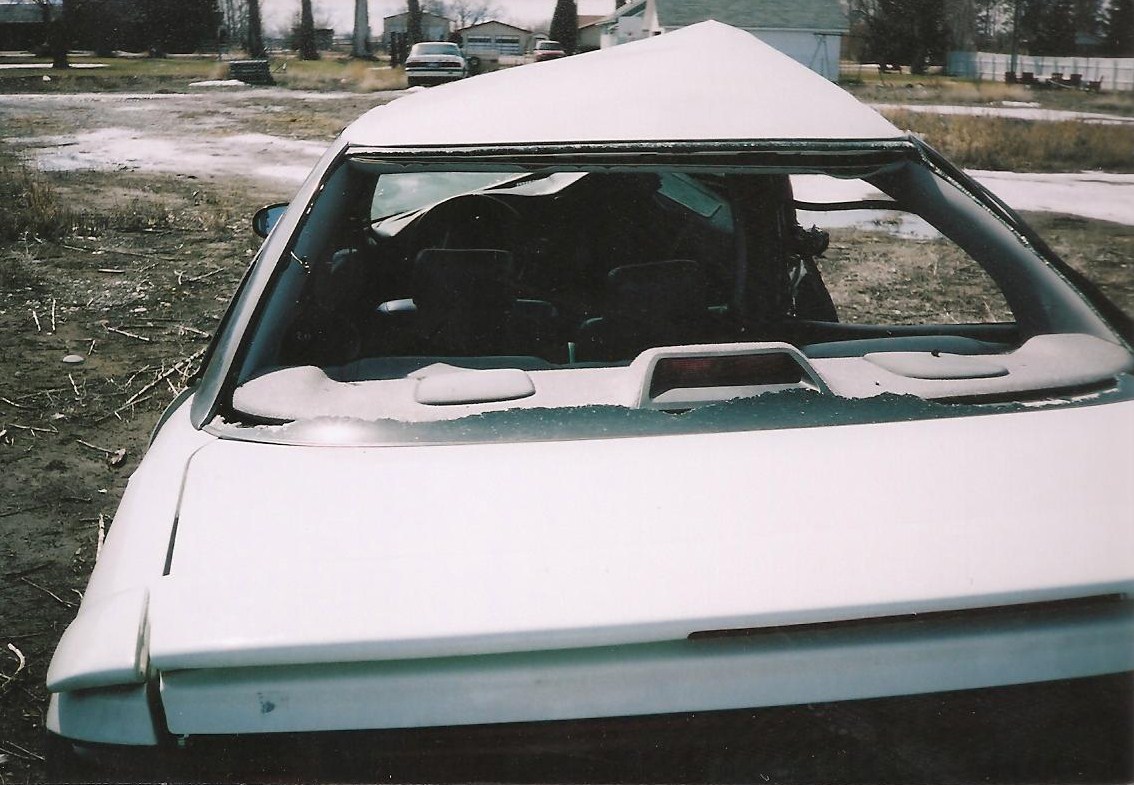 right by my side. I hated this exercise. Any movement caused more pain. I stopped and looked out the window and saw our car. “When did they bring that here?'” I asked Dan. He said “They brought it on a big truck a couple of days ago.” I couldn’t believe my eyes. I felt like it was an enemy sitting in the yard. I didn’t want to look, but at the same time I couldn’t get my eyes off it. After all it did play a big part in saving my life. We had to pay for each day it sat in the wrecking yard, so they brought it to the house until the insurance company totaled it and hauled it off. My wonderful neighbor and friend went and took pictures of it for us. I couldn’t even look at them for a while. Now I keep them in a special place and take them out every now and then. I cry when I do.
I tried to keep a good attitude and be positive, but I won’t lie to you, life sucked. I kept hearing over and over in my head the words God told me when he said I would be ok. I clung to that with all my heart and soul. I will never lose my faith. Dan and I were tired of trying so hard though. Every time we would get on our feet something would happen. I know this happens to all of us, but you have to admit it really sucks when it does. I know, you know how we felt, because you have been there too. We were finally getting ahead. My business was doing well and I loved what I did. We had just bought a new car. We were getting ready to build a house. Things were perfect and we were happy. Now we were losing it all. My business was going under because I couldn’t be there to manage it or do the work. I tried going back to work after a couple of months but it was just too hard. Our life was falling apart again. Even a year after the accident I was still in considerable pain. I had a hard time breathing due to the injuries to my lung and I felt like I was losing it. I used to be confident and now I got nervous easily, I constantly got lost driving in the car or would drive by my destination two or three times. I had to learn how to write again, what little math skills I had were now completely gone. I loved to read but would fall asleep after a page or two, then forget what I was reading and had to start over. I couldn’t watch movies because I didn’t understand what was going on or follow the story from beginning to end. I started to blurt out the rudest things just randomly. I was moody and would sometimes sleep for a whole day. Conversations gave me headaches. I couldn’t remember what somebody had just told me moments before. I couldn’t remember our last Christmas or many other memories. I couldn’t remember how to cook my families favorite meals. I forgot so many appointments and was easily confused too. I was still in pain and I slept most of my days. I am still nauseated and dizzy every morning. What is wrong? Why can’t anybody fix me. All I had for now were painkillers and a huge milligram RX for antidepressants. But still I didn’t give up. I went to lots of Dr.s to find the source of my pain, or pain pills that worked, and to see if they could tell me why life was so different now. But none of them could. In fact, it would be seven years before my diagnosis would finally be revealed and little did I know it was going to get worse before it got better! If you would have told me that then, I think I would have thrown in the towel. Dan ended up getting a better job, so we ended the cleaning business, uprooted our kids and moved out of state so I could stay home and recover. I know the kids hated us because of that for a while.
That night changed my life forever. Mine and my families. We will never be the same. I will never be the same. I listen more, I live daily life at a slower pace, I cherish every moment. I try my hardest not to hurt anyone. Each year I get is one more year with family and friends that I may not have had. I count all my blessings no matter how small and I notice the little things. Some things matter, some things don’t. The important things do. I dig deeper and try harder. God told me I would be ok. I cling to that promise till my hands hurt and there are no more tears. My journey had just begun.
This song means a lot to me. I have it memorized. I live and breathe every word. Music helps me cope I think. This song was on the radio the year the accident happened and I listened to it over and over. I still listen to it. So bring on the rain, cause I am not afraid.
Rest and glass
•June 24, 2010 • 2 CommentsRest
I have been a good girl and have been sleeping most of the past two days following a really bad day.
It began on monday when I just didn’t feel right all day and was very quiet and sad. I should know that this is a que. It took me a while to realize it. But when I did I finally just allowed my self to crash. I woke up after sleeping until 10:00 on Wednesday still brain dead and unable to think much so I let myself sleep for a couple of hours today after I got Katie from swim team.
It’s been a busy month with Jon graduating and we had lots of family, 14 of us staying in or around the house in a trailer. It was a ton of fun. I took all my breaks and family was a huge help and I made it through it all very well if I say so myself. Better than I have in a long time. I was able to really enjoy having family and friends around. Family is the huge help. When I take my breaks they just take over and finish dinner, or dishes or keep company busy until I am back. It’s absolutely wonderful.
So, I guess with the excitement of having a child graduate and all the anxiety that comes with it, I finally allowed myself to rest. Boy did I crash. I am feeling much better today. Enjoying the calm, peaceful feeling I have after getting lots of rest. It doesn’t happen very often cause my anxiety is incredibly high and won’t let me rest even when I am exhausted. Just like “Alice in Wonderland” she thinks 6 impossible things before breakfast. I used to think 10 horrible thoughts before I get out of bed. Thanks to my cognitive therapist I worked through it and finally got to that place where I could sleep for a while. I don’t use medications to help. Tried that and it’s just a band-aid, but when I took the band-aid off the problem was still there. Those closest to me know how I “love” medicine and just give up and throw it all away anyway. So I learned to work through it with my head and lots of reasoning and positive thoughts. Works better than any drug although it may take a little longer. Thanks Dr. Frazier for the strategies!
Glass
Yesterday I went to the mirror to look at a bump on my forehead. I scratched at it with my fingernail thinking it was just another zit. But when I scratched it an oblong silver sliver came up and stuck out of my forehead. I pulled at it with my fingernails (gross) and rolled the sliver between my fingers. It glimmered. Not a zit. Glass. Seven years and I am still getting glass out of my forehead!
Dr. Baker pulled lots of glass out of my eye after the accident. Three months after when the swelling went down I could feel more glass in between my eyelashes and my eyebrow. So back to Dr. Baker. He cut me open and pulled out five pieces. One was slightly bigger than an eraser on the end of a pencil. It made a big plunk when he dropped it into a pan. Dan kept that one. He still has it somewhere. Don’t know why. Maybe I’ll ask him when he gets home tonight. I had to go back to Dr. Baker a few times and now they just come in the form of zits. Funny. And gross.
 our headbangers ball