Fishy truck ride

•November 14, 2011 • Leave a Comment

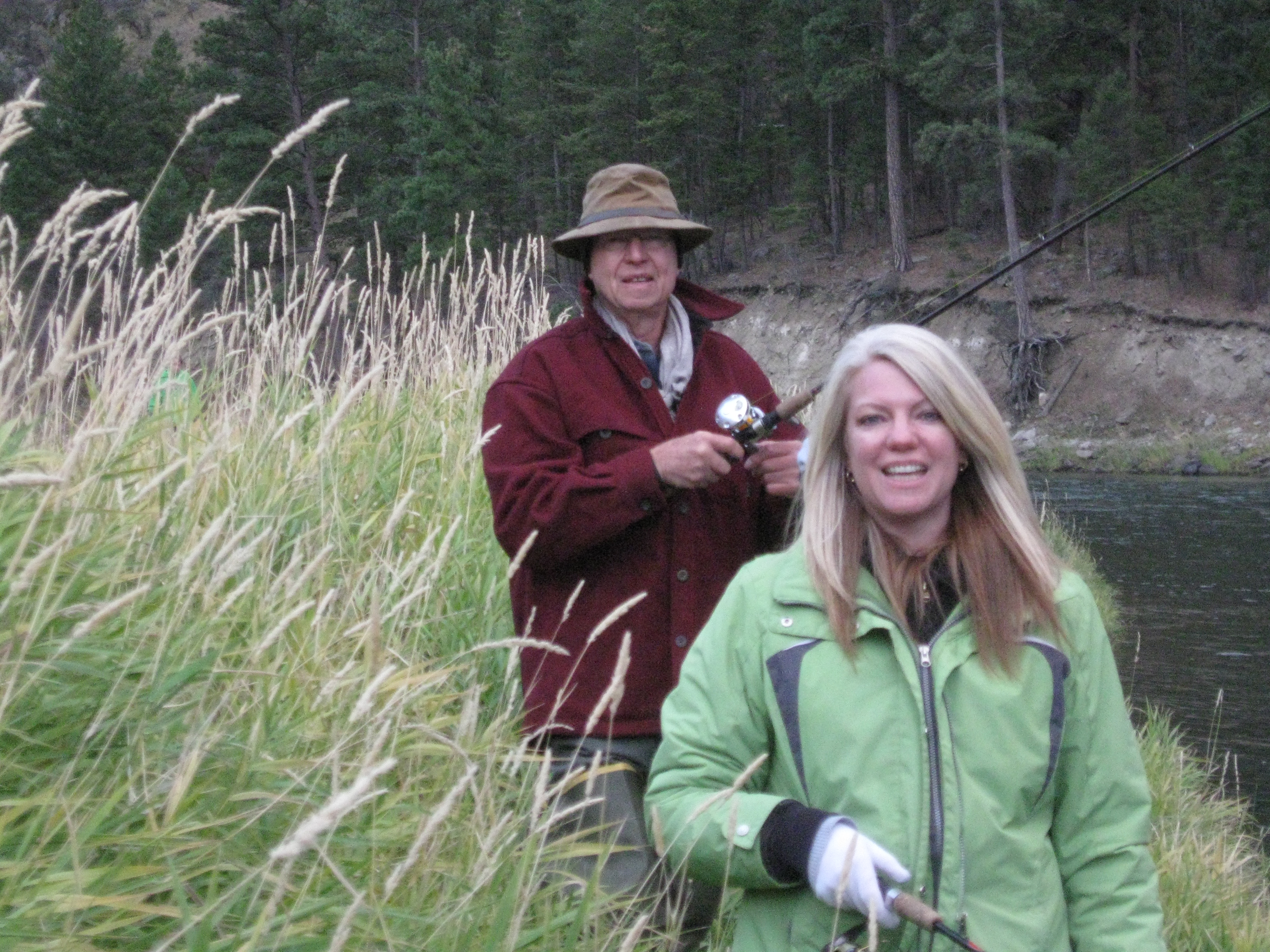
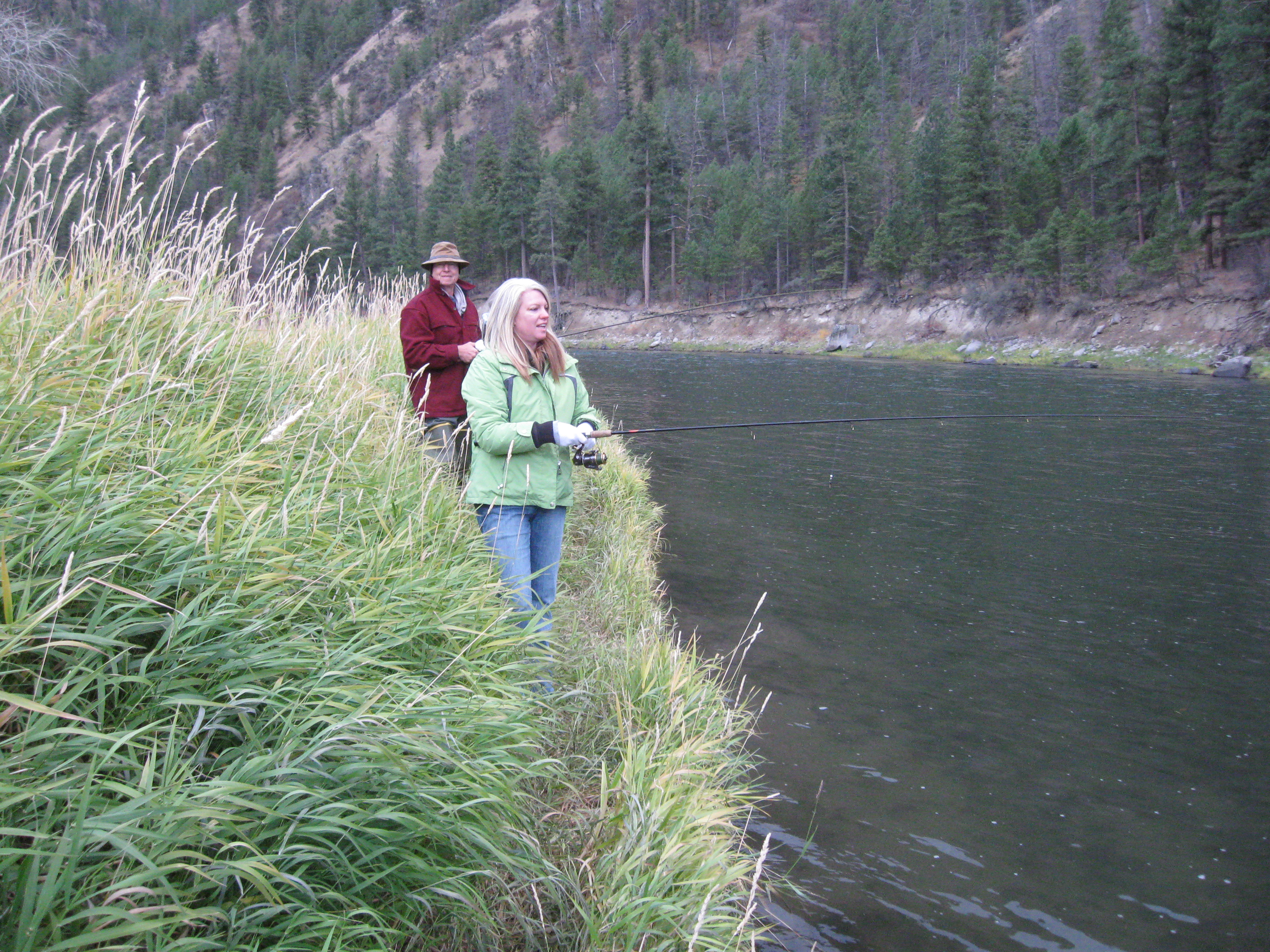
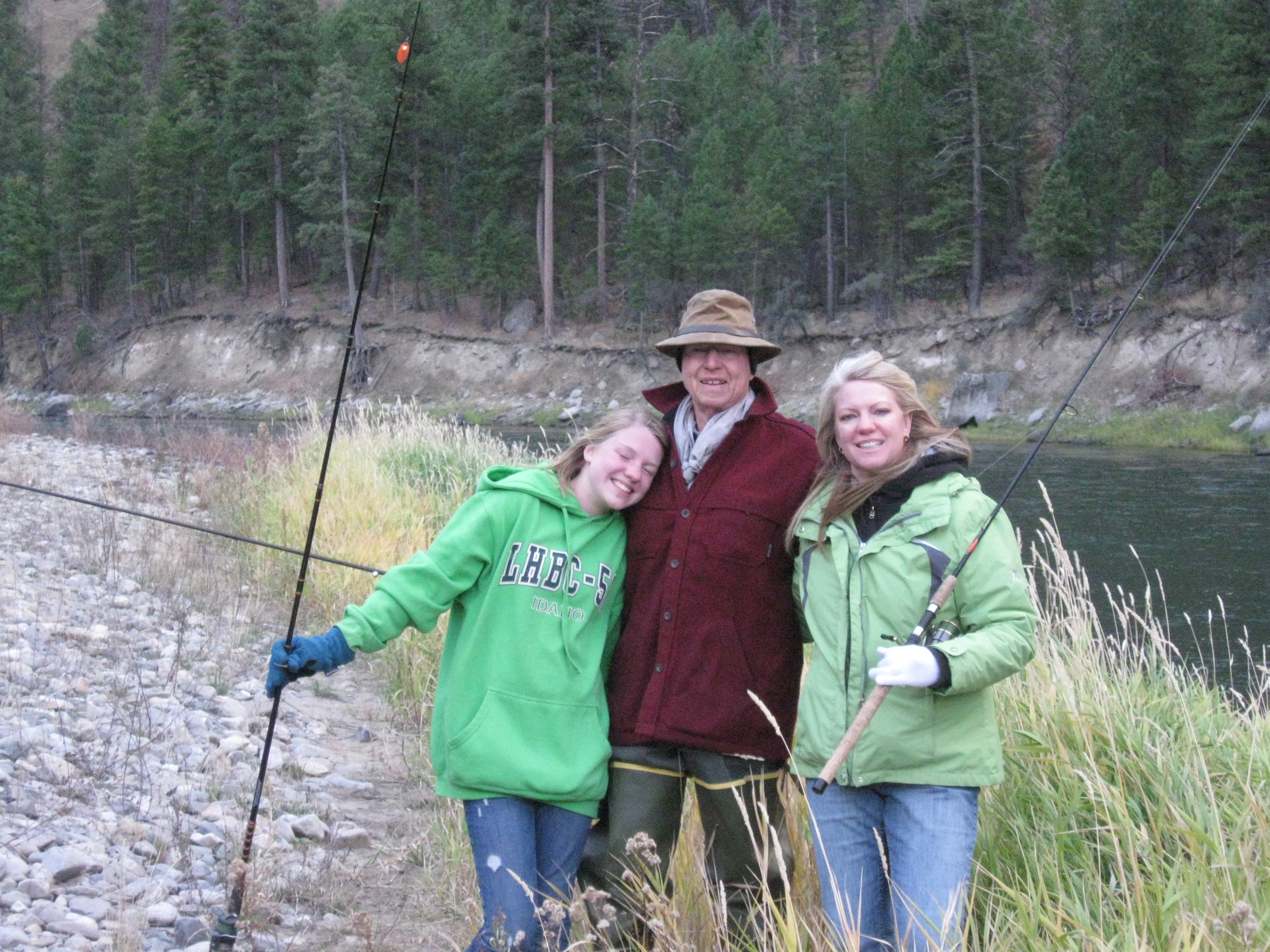
I’m so excited to go on our fishing trip. I’m even looking forward to the 6 hour drive(I’m lying). I absolutely love to fish (the truth). Plus, my husband and youngest daughter are going and my dad will be there too. It’s near a place where he and I have spent alot of time. Dad with his grandparents and parents and when it was my turn, me with my grandparents. But of course, the location is a secret. Aren’t all good fishing spots a secret?

I’ve been trying to focus on the positive things about this trip for a couple of weeks. Today’s the day and I am absolutely making this into the most wonderful trip on earth and telling myself how safely we will arrive and that nothing bad will happen while we are there and we will all arrive back home safely. These are the things I say to myself to convince my fears to take a hike. Sometimes I actually yell at them. Call it crazy, psycho, neurotic, weird, whatever. I have lots of names for it. But the most important one is fear, anxiety, broken neuron pathways and PTSD. It all starts as soon as we plan a trip. This little voice in the back of my head whispers “if you get in a vehicle, you’re gonna die.”. I gently push the voice and ugly thought away. As leaving day approaches the voice gets louder. “IF YOU GET IN A VEHICLE YOU ARE GONNA DIE!” Oh Lord, here we go again. I’m not so gentle at telling it to leave. I yell back. “GET THE F#*$ OUT OF MY HEAD!” Sound a little crazy? It’s not, it’s actually strategy. Healthy, no pill, cognitive talk to get people like me thru the day. So begins the tiring battle of wrestling my PTSD and trying to just enjoy the ride.

Ever since the accident, when I get into a vehicle, or plan to get in a vehicle I have flashbacks and become terrified of getting in another car crash. Very normal for somebody who has been thru a traumatic experience of any kind. We tend to relive the experience over and over. My blinders have been removed and I know exactly what can happen to a human body and brain when you crash. I have the scars and daily struggle with a TBI as constant daily reminders. Those things will never let me forget, or be completely relaxed in a vehicle for an entire trip.

My mind says, I’m going to die, my heart says I just want to have fun and enjoy the trip. But vehicle rides, or in my case truck rides, because I don’t drive a car, and never, I repeat, never will, turn into a fun park rollercoaster ride. It’s the PTSD working overtime. Plus add in the broken neuron pathway between my eye and my brain that tells my brain the direction I’m going. When I am in motion the signal gets mixed up and it makes me feel like I’m constantly sliding to the right, out of control, even when I am going straight and often when I am completely still. I have spent hours on dizzying exercises, only to be sick all day, trying to retrain my brain and build a new neuron pathway around the broken one. I’ve logged even more hours on the positive talk. It’s been worth every minute. Because it works. Most of the time. Until I’m tired or get spooked by a car pulling in front of us or some dumb move by another driver like texting while driving,  or just that silly broken neuron pathway wanting to play tricks on me. Then I’m back to panick mode and the roller coaster feeling is right behind it.

I’m somewhat embarrassed to admit the chaos of what goes on when our family heads down the road. I should record it for U Tube and I would make millions. Then maybe we could laugh at it someday.  It goes something like this; Dan is driving on the freeway, going 75-79 mph, because I won’t let him go any faster. Me, I’m riding along just fine. Until, all of a sudden the neuron pathway screws up, I jump while at the same time completely sucking all the available oxygen out of the truck. (In my mind we are flying off the road to our doom again)Thru tears and a full-fledged anxiety/panick attack I try to catch my breath and ask Dan to “PLEEEEEEAAASSSSSSEEE slow down!” You know, to like 10 mph. Of course Dan stays calm thru out this whole explosion going on in the seat next to him and quickly rolls down a window to replenish the oxygen level to normal. (I’m lying again) Actually, he yells, “Diane! You scared the SH!$$ out of me!” Of course I did, and I know it, along with everyone else in the vehicle. Then I sheepishly say I’m sorry even though I really can’t help it. But sometimes, no matter what I do, relaxation techniques, positive talk, and sometimes earplugs and a hood over my head, it happens anyway, it’s just the way I am now. I used to cry and be ashamed at the whole scenario until I found out about the broken neuron pathway and PTSD. Finally we all understand why I do it. Now I embrace it. So now, Dan, after he composes himself  reassures me and tells me I’m ok. Katie reminds me to breathe and as soon as we can we try to laugh and keep me distracted. Anything but sedating me or drinking a couple of shots of Jack Daniels before I climb aboard. And the journey continues.

So now, along with the packing and preparations I add a heavy dose of rest and positive mental talk. I really could die at any moment. Any of us could.  But I’m going to try my best to have a whole bunch of fun before I do. I refuse to stay home too scared to leave the house. I have a lot of living to do and I am going to enjoy every minute of this second chance I’ve been given. As I climb aboard my big safe truck/roller coaster ride, I smile, take a deep breath and hang on for the ride. (or…..raise my hands into the air, close my eyes and scream till it’s over!) Wish me luck! We’re headed to where the big fish are.

Veteran’s Day

•November 11, 2011 • Leave a Comment

  This is a patch that goes on an Army uniform. Once on my husband’s uniform 21 years ago. It’s an 8th Infantry Division patch. He was in the 12th Engineer Battalion that helped make up the 8th Infantry Division. His best memories are of this time of service in Germany. Echo Hard was their name. I love to listen to the stories and see the look on his face as he remembers the times. The men were really close, like brothers. Reading their posts on Facebook this morning told me that they still have that special bond years later. They still keep in touch and will never forget each other.

It took me a long time to understand why a soldier would want to risk his life for low pay, possible injury and maybe death, not to mention little recognition and support after his service from his country and government. I have seen what war does to the minds and bodies of the men and women who serve, and I don’t like it at all. But thanks to my husband, who helped me, I get it. I understand. So I want to say a special thanks to all of you in “Echo Hard”. And a big thank you to all our Veteran’s today. We appreciate all you have and continue to do for us. You won’t be forgotten.

All soldiers return from service, wartime or not,  affected by their experience and/or injuries. Some you can see and some you can’t. A RAND Corporation study Invisible Wounds of War states that there are  400,000 total brain injuries sustained by soldiers serving in Iraq and  Afghanistan.  And more every day. Find out about Post Traumatic Stress Disorder and how it affects our Vets in these videos from U tube, Coming Home (Part 1) and Coming Home (Part 2).  This music video, PTSD by SGT DUNSON says alot about the realities of dealing with PTSD after a soldier returns home. Watch it, you will see. There are soooooooo many stories, I had a hard time picking a few good ones for you. So when you see a vet , thank them, and know what you cannot see.

Get involved and see how you can help. Find your Local Veteran’s Affairs Department here. Find your local State Representative and ask him about the bills in-house that are changing health care for vets. And tell them our soldiers need MORE than they are getting now. But most of all, be knowledgeable and understanding of our vets and all they go thru.

I thank God everyday for keeping my soldier whole. Love you Dan! And yes, I love you too ECHO HARD!!! Keep in touch boys. and Thank you!

Waking up from a dream

•October 17, 2011 • 4 Comments

Shortly after our decision to move out-of-state, we found the perfect place to build a house. It was down in a secluded canyon, no neighbors and had a great view of the Bear River and the mountains. 5 bedrooms, 3 bathrooms, a den, living and family rooms, an outdoor kitchen with an amazing view of the river, a huge garden, a horse, two rabbits, 15 chickens, 2 lizards, 2 cats, three dogs, and an orchard later we had our dream home. Everything we had always wanted.

Our first year in the house Dan bought me a peach tree for our anniversary and planted it right outside the kitchen window so I could watch the blossoms come and go every spring, listen to the birds and hope for fruit every fall. The very next year it produced a couple handfuls of small peaches. So I made a pie for my family.  My peach tree is now taller than me. It’s big and bushy and full of peaches. It looks like it will be its best year yet.

There comes a time when you have to make decisions. Responsible decisions based on reality and some times that reality comes crashing down on your dreams. We have recently decided to sell our home. There are many reasons we are selling our home, but the ones I’m thinking about today are personal and physical. I can’t physically take care of a house this size anymore. Of course Dan helps, family helps, and friends help too, but it’s just too much. Plus having only one income, since I am unable to work and can’t start school (doc’s orders), make it a struggle to maintain the lifestyle we are in.  Add to that my developing asthma and allergies that left me sitting around with no energy more often than I liked this summer. Having only one lung that works really puts a squeeze on the breathing when you have asthma and allergies. Besides, who wants to live in a big, empty house? We have kids in college and only one at home now. We both knew this day was coming. It will relieve a lot of stress to simplify and reduce the things in our life that we can control. Then we can be as prepared for the things we can’t control as possible. We have to responsibly face the fact that my health is not the best and will only progress as life goes on. Not doomsday, just being real. We are planning for our future so the transition will be easier. But the future is coming faster than I planned.

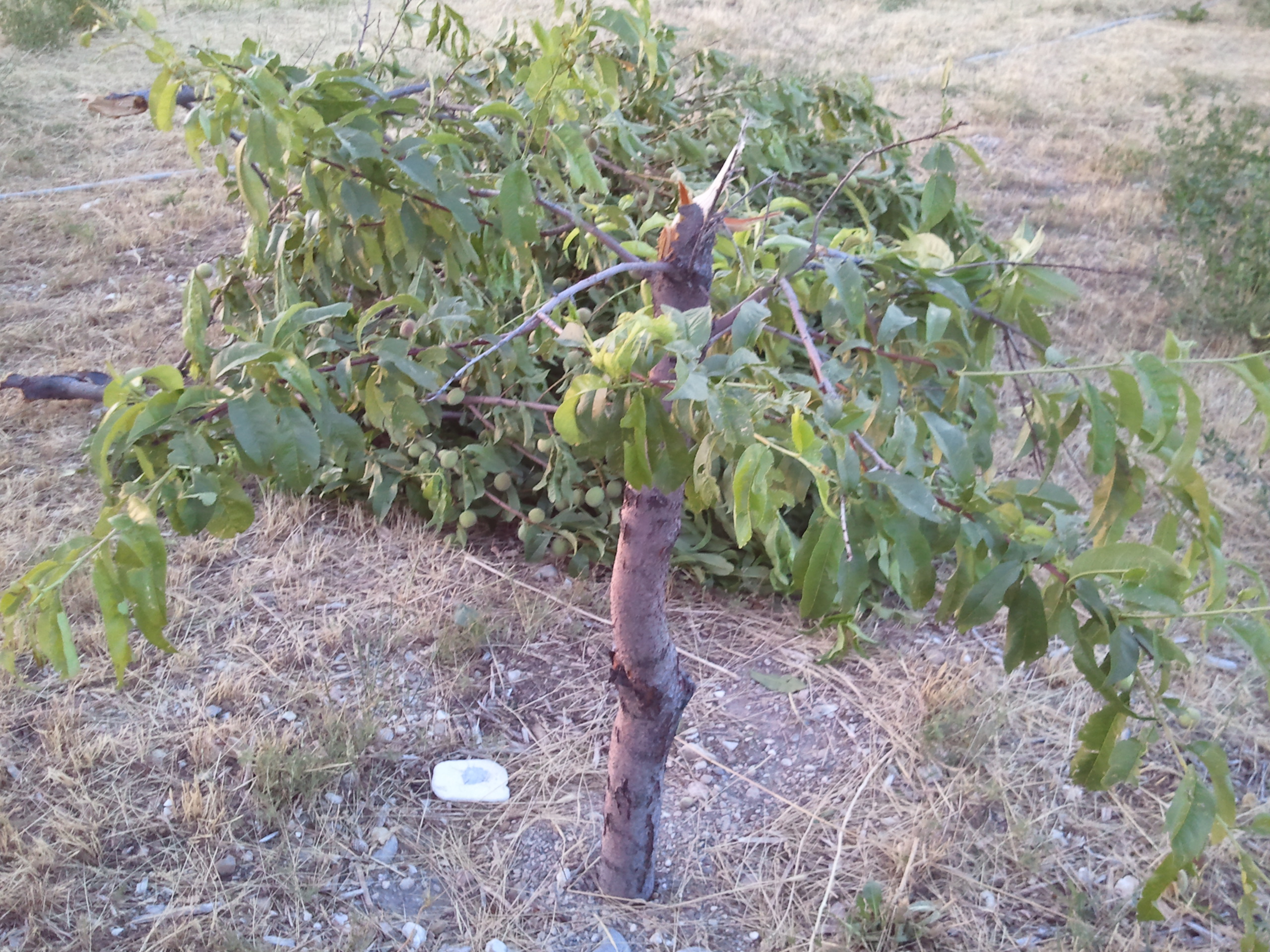
A strong windstorm came thru the canyon this summer. My tree was really bending in the wind. Dan heard a crack and went to the kitchen window. My tree lay broken on the ground. It snapped in half! The big, bushy, peach filled top was now gone. It just couldn’t take all the pressure from the strong, blowing wind. I cried for a week over that tree.

Broken

When I finally got the courage to go and look at the damage and clean up the mess, I discovered that there were 4 small wilted branches just below the break. I grabbed a saw and smoothed up the damage. Sprayed on some pruning sealer, gave it some water and headed to the house with a hopeful heart.  For the rest of  the summer and into fall, I watched it through my kitchen window.  The tree began to slowly come back to life. And it was beginning to grow again. The birds came back too.  And maybe next year it will produce some fruit.

Growing again

Well, the “For Sale” sign is in the front yard by the road. I’m sad, but also very excited for a new adventure……..and a smaller home to clean.  Possibly by next fall, despite the economy and God willing, our house will have sold. Maybe someone will be baking a peach pie for their family.

Sometimes life is strange. It doesn’t always turn out the way we wanted. Dreams come and go. Sometimes we are broken and sometimes it seems to all go to hell. But I’ve been to hell and back again. I know the way, and if I let it, the journey will make me stronger because of it. I will continue to grow wherever I am planted. Even though life doesn’t follow the plans you made, If you stop and look around,you still end up in a really cool place after all.

Grocery Guru……..NOT!!!

•September 5, 2011 • 8 Comments

I am waving the white flag. I surrender. After years of giving up the list, sometimes having Dan pry it out of my clenched fist, only to stubbornly try it again. I am finally  handing over the grocery cart, the coupons, and the list, to Dan. Again. Some part of me just does not want to give up on this one. Maybe because of the fact that if you are a woman you should be able to shop, right? And men claim we are very good at it. Well, not me. I am really bad at it.  I am actually missing the tools required to do it. I will probably try again though, soon. Lord help us……… and the budget. Good thing Dan is good at juggling.

I have wandered around stores aimlessly.  I have lost money. I have gone WAY over budget. I have brought home stuff we don’t need. I have filled a cart, only to find it full of un-needed items, wondering when I put it in the cart while trying to put it all back and overwhelmed I abandoned it at the store.  I have done everything but run away, screaming. (ok, maybe I did that once) And by the time it is all over with I have a huge, pulsing, can’t function headache! Now I have to pay for the experience. Get everything to the car. Get everything home. Get everything in the house. Put everything away. Sounds simple to you. For me it is overwhelming. It leaves me Dazed and Confused. Total overload. Total failure.

fail·ure (flyr) n.

1. The condition or fact of not achieving the desired
end or ends: the failure of an experiment.
2. One that fails: failing at one’s job.
3. The condition or fact of being insufficient or
falling short: a crop failure.
4. A cessation of proper functioning or performance:
a power failure.
5. Nonperformance of what is requested or expected;
omission: failure to report a change of
address.
6. The act or fact of failing to pass a course, test, or assignment.
7. A decline in strength or effectiveness.
8. The act or fact of becoming bankrupt or
insolvent.

Most women are good at shopping. Really good. They collect coupons. They run to multiple stores with children in tow to get the best deal. They feed huge families on small budgets. They provide their household with food and other really cool stuff. They make special occasions out of it. They go with other women and talk and have fun during the whole experience. They actually ENJOY shopping. Weird. Not me. I am a woman with out the shopping “gift”

I am currently sitting in a nice new office chair so that I can blog about this epic fail to you in comfort. One item. One little black office chair. Simple right? Run to Staples, buy office chair on sale, come home, put it together and enjoy, right? Ummmmmmm. Well, that’s not how I do it. I go to Staples. Strategies ready.  I wander around the store and find the chairs. I look for prices. No prices to be found. I have brought Katie with me. She has been instructed not to say anything so that I can concentrate on my purchase and get through this seemingly simple task. . She finally points out to me that all the chairs have tags on them. BIG tags on them. With the price. Convenient right! Why, oh why, can’t I see them until she shows me? It’s my TBI shopping curse. Damn curse. Strategies, by now are nowhere to be found. I walk around the chairs. I leave the chairs. I go back to the chairs. We pick out a chair. Katie carries it to the cashier. We pay for the chair and Katie takes it to the truck. I need a break from all this action. So I send Katie into another store for batteries (yes, I forgot to get those in Staples, even with my list right in my hand) while I take a break. Feeling refreshed I grab the flyer we got with the chair at Staples. Oh jeezzzzzz. I find a much better chair for a much better price. So when Katie returns we head back to Staples. She carries the chair in. We buy the better, on sale chair. Katie carries it out to the truck and home we go. Only to find out I am missing $30 somewhere? We never find it. It’s not at the store, it’s not in the truck, it’s not in my purse. While Katie puts together the chair, I retreat to my bed for a much-needed break and I surrender to an exhausted nap.

So here I sit in my new chair. Firmly seated in the fact that I am giving up the grocery cart one more time. Even after applying strategies from my therapist, I still can’t do it. I’m a shopping drop out. No matter how organized or simple the list. I admit defeat.  Until next time……………..

Lost & Found: What Brain Injury Survivors Want You to Know

•August 30, 2011 • Leave a Comment

Lost & Found: What Brain Injury Survivors Want You to Know

Barbara J. Webster, Lash & Associates

I need a lot more rest than I used to. I’m not being lazy. I get physical fatigue as well as a “brain fatigue.” It is very difficult and tiring for my brain to think, process, and organize. Fatigue makes it even harder to think.

My stamina fluctuates, even though I may look good or “all better” on the outside. Cognition is a fragile function for a brain injury survivor. Some days are better than others. Pushing too hard usually leads to setbacks, sometimes to illness.

Brain injury rehabilitation takes a very long time; it is usually measured in years. It continues long after formal rehabilitation has ended. Please resist expecting me to be who I was, even though I look better.

I am not being difficult if I resist social situations. Crowds, confusion, and loud sounds quickly overload my brain, it doesn’t filter sounds as well as it used to. Limiting my exposure is a coping strategy, not a behavioral problem.

If there is more than one person talking, I may seem uninterested in the conversation. That is because I have trouble following all the different “lines” of discussion. It is exhausting to keep trying to piece it all together. I’m not dumb or rude; my brain is getting overloaded!

If we are talking and I tell you that I need to stop, I need to stop NOW! And it is not because I’m avoiding the subject, it’s just that I need time to process our discussion and “take a break” from all the thinking. Later I will be able to rejoin the conversation and really be present for the subject and for you.

Try to notice the circumstances if a behavior problem arises. “Behavior problems” are often an indication of my inability to cope with a specific situation and not a mental health issue. I may be frustrated, in pain, overtired or there may be too much confusion or noise for my brain to filter.

Patience is the best gift you can give me. It allows me to work deliberately and at my own pace, allowing me to rebuild pathways in my brain. Rushing and multi-tasking inhibit cognition.

Please listen to me with patience. Try not to interrupt. Allow me to find my words and follow my thoughts. It will help me rebuild my language skills.

Please have patience with my memory. Know that not remembering does not mean that I don’t care.

Please don’t be condescending or talk to me like I am a child. I’m not stupid, my brain is injured and it doesn’t work as well as it used to. Try to think of me as if my brain were in a cast.

If I seem “rigid,” needing to do tasks the same way all the time; it is because I am retraining my brain. It’s like learning main roads before you can learn the shortcuts. Repeating tasks in the same sequence is a rehabilitation strategy.

If I seem “stuck,” my brain may be stuck in the processing of information. Coaching me, suggesting other options or asking what you can do to help may help me figure it out. Taking over and doing it for me will not be constructive and it will make me feel inadequate. (It may also be an indication that I need to take a break.)

You may not be able to help me do something if helping requires me to frequently interrupt what I am doing to give you directives. I work best on my own, one step at a time and at my own pace.

If I repeat actions, like checking to see if the doors are locked or the stove is turned off, it may seem like I have OCD — obsessive-compulsive disorder — but I may not. It may be that I am having trouble registering what I am doing in my brain. Repetitions enhance memory. (It can also be a cue that I need to stop and rest.)

If I seem sensitive, it could be emotional lability as a result of the injury or it may be a reflection of the extraordinary effort it takes to do things now. Tasks that used to feel “automatic” and take minimal effort, now take much longer, require the implementation of numerous strategies and are huge accomplishments for me.

We need cheerleaders now, as we start over, just like children do when they are growing up. Please help me and encourage all efforts. Please don’t be negative or critical. I am doing the best I can.

Don’t confuse Hope for Denial. We are learning more and more about the amazing brain and there are remarkable stories about healing in the news every day. No one can know for certain what our potential is. We need Hope to be able to employ the many, many coping mechanisms, accommodations and strategies needed to navigate our new lives. Everything single thing in our lives is extraordinarily difficult for us now. It would be easy to give up without Hope.

Created with the assistance of the “Amazing” Brain Injury Survivor Support Group of Framingham, MA.

Living Well with a Disability

•July 29, 2011 • 2 Comments

Since my TBI diagnosis I have been going to a few support groups in my area. I have a strong desire to meet people like me. People that understand and know what I am going through. Somebody I can relate to. No judgement, just understanding. But I have not been a regular attendee. I am very sporadic at showing up.  Because……… that would mean I have to admit that I have a disability. Most of the time I am in denial of my different abilities, and going to these activities would mean I have to admit that I am disabled by my moderate/severe TBI and chronic pain and fatigue. You can’t see my disability, so that makes it very easy to hide. I have become a master of disguise.  So when one of my friends from my support group sent me a Facebook message wondering why I wasn’t at the “Living Well with a Disability” class, I rolled my eyes and thought to myself, “….because, I don’t belong there”. My friend went on to say that the class was really good and that I shouldn’t miss it. Damn. So, I talked to my husband about it and now that I am writing this I think I may have been the victim of a plot to actually get me to the class.  So, my husband says ” if nothing else, you should go because Serenity wants you to go. She likes you and wants you as a friend” Oh damn again! Fine, I will go, but only for Serenity.  I am very stubborn. God bless my husband for knowing how to handle that wonderful quality in me. So I went. And I will never be the same.

All the therapies, all the exercise, the diet changes, the medications, the Dr. appointments, nothing has helped me embrace who I am now more than the seven incredible people you see in the picture above.  They look like everyday average people, but they aren’t. They are the strongest group of people I have ever met in my life. They would kick your ass in a competition of inner strength. Soon, I wasn’t going for Serenity, I went for me.  I never missed a session. This is why.

Every session began with treats and small talk. Not your normal small talk.  Not ‘oh the traffic was horrible today’ or ‘I’m having such a bad hair day’ or ‘my car wouldn’t start today’.  I can almost guarantee that when you think you are having a bad day, theirs was worse. One was telling of her ordeal and red tape of trying desperately to get a seizure dog and getting denied and starting the process over again. Another was telling how hard it was to even get here, in her wheelchair, she was exhausted before class even started “But I’m here” she would say with a big smile on her face. Yet another rambled on about random things and would not stop until guided to, his injuries to the frontal lobe of his brain do not tell him he should stop talking, he spoke of the trials of getting and keeping a job.  Another cannot live with his wife due to their disabilities and talked often about living apart. My friend Serenity talked about the fact that her husband left her because of changes in her personality from her Traumatic Brain Injury and the struggles of keeping a job with a TBI. And another had to keep leaving to go outside and smoke because he couldn’t sit still and had to take breaks. You see, all of us have brain damage of some kind. So our small talk was very different from what you usually hear.  I listened to each one of them talk about getting through their days with a disability. I was amazed and took it all in.  Finally I had found people like me. Here I was feeling sorry for myself and hiding my disability every chance I got. They embraced theirs and faced it head on everyday.  Real, hard challenges. No complaints.  And they talked about it openly and with a positive attitude, just like it was an average day for them. I needed to find out how they do that, and I did.

When we eventually got settled,  our leader would go through a chapter in our book and we would discuss it together.  We went through chapters together like Goal Setting, Beating the Blues, Healthy Communication, Physical Activity, Eating Well, and Advocacy. I was fairly quiet for the first few sessions, just taking it all in, amazed by the incredibly strong people I was surrounded by every Tuesday, once a month for just a few hours.  The course was really good. Serenity was right. But what each one of us brought to the class was even better.  I soon realized how much they had to offer with their experience and wisdom. We all have a disability but what we were all able to bring to class was the good stuff. Sure the book was great, but it led to some incredible discussions on how to really deal with life when you have a disability and all the challenges that come with it, with people who go thru it everyday. When I felt comfortable I began to talk more about some of the issues I dealt with and in doing so I began to embrace the woman I am now and not hide my disability. And in return for opening up, I got a wealth of information, encouragement, love and support from each person. I have a huge amount of admiration and respect for my class mates. They are some of the strongest people I know and I was lucky enough to get to experience their strength. They always had a positive, never give up, tried and true answer for things I used to think were roadblocks. Instead of giving up, they took a deep breathe, gathered all their strength and courage and went around the problems and found another way to accomplish things. And they shared it with me. Thanks to Serenity and my husband for getting me up off my stubborn, feeling sorry for myself butt, and into class, where I most definitely belonged. Funny thing, I don’t feel sorry for myself anymore.

Continue reading ‘Living Well with a Disability’

Wounds of War (revised)

•May 30, 2011 • Leave a Comment

In Honor of our Veterans, so that you know all they go through for freedom.

When I heard the news of the killing of Osama Bin Laden,  I was stunned and a little numb. I could neither celebrate or cry. I didn’t know exactly what to do or how to feel.  For some it brought closure for 9/11. But it certainly won’t end the war on terrorism. For me it brought fear. Now it would only be a matter  of time before retaliation begins. They hurt us, we hurt them, then they hurt  us, so we hurt them. When will it all end?  My heart is heavy with the news of  all this suffering.   Did you find yourself thinking the same thing?   If so,  take a few minutes and read the articles I have collected below about the  realities of war.

The first two article’s are from a blog, Living LutheranOn celebrating the death of our enemy and Why I will not Celebrate the Death of Bin Laden,  two articles, one referenced within another. Two opinions represented very well. These articles really got me to thinking. They focus on the deeper issues, the ones you don’t hear in the nightly news.  I found myself  reading and pondering them continuously thru the past few weeks.

Here is a story posted in Brainline, an article that really ripped at my heart-strings.  It’s about a young teacher, married to a soldier, she’s pregnant
with their first child and she is suddenly thrust into quitting her job and  caring for her husband when he is severely disabled by a Traumatic Brain Injury.
Here is her story; Military families are thrust into caregiving roles for severely injured troops.  A story that hits close to  home, one I related to all to well, I am a TBI survivor myself. After reading  her story it struck me that her struggle didn’t end when Osama was shot to death. It still goes on. It won’t go away.

A RAND Corporation study Invisible Wounds of War states that there are  400,000 total brain injuries sustained by soldiers serving in Iraq and  Afghanistan. Did you get that? 400,000 Total Brain Injuries to date and more every day. That is a lot of injured soldiers.  The problem with  that huge number is found in the title of the study, Invisible Wounds of War, many TBI’s go undetected. That means there are soldiers not getting the treatment they so  desperately need. My own TBI was not diagnosed for 7 years, and that untreated, almost cost me my life. That leaves me wondering what the real total is and wishing I could magically find those soldiers and help them. What about other injuries, what and how many are they? I hope you are ready to help our soldiers.  They’re our sons, daughters, dads, mothers, sisters, brothers, neighbors, friends, and relatives.  You don’t have to look far to find an injured vet in your community. Find one and ask them to tell you their story. Find out how to be a voice for our soldiers and see how you can help. Sadly, they are not getting the help they need from our government when they return from serving.  So if we don’t help them, who will?

Just recently, in the past few months, the rules changed and soldiers can now receive a Purple Heart for a Traumatic Brain Injury. Really? When did we
become selective about which war injury could receive acknowledgement?  Read Brain Wars: How the Military is Failing its Wounded to see for yourself.

The effects of Post Traumatic Stress Disorder, or PTSD, on our soldiers has been and will be a huge issue to deal with.  Learn more here in a story about an upstanding citizen, policeman, husband, who joins the service and upon returning home realizes he will never be the same and who finds himself divorced, friendless and in prison due to his untreated TBI and PTSD. Or find out more about other soldiers and their families dealing with the same thing  in this two-part series called Coming Home (Part 1) and Coming Home (Part 2).

Another fact that left me speechless.  Between 23-40% of our homeless are Vets and that number is on the rise. That means that out of all our homeless persons, almost half of  them are Veterans. I am still in shock over this one.

So I got curious about how many have died for my freedom. I found those numbers here.

Just to be fair  I also googled “the benefits of war” You may want to also.

After reading all of this, I now know exactly how to feel when I hear of Osama Bin Laden’s death.  I feel that when I hear of death and suffering, no matter who it is, I don’t like it. I feel that I can’t ask a soldier or their family to endure hardships for my freedom. I feel for the soldier who returns home feeling lost, deserted and confused. I feel for the people injured by war. I feel for the people who call home the countries where wars are being fought. I feel that one wrongful death being avenged by another wrongful death, is not ok.  I feel that the suffering should stop.  I feel that war is not the answer and we must find a different way. I don’t know to fix this or what the answer is,  but I do know that 400,000 Total Brain Injuries, plus more everyday on top of all the other injuries is way too many injured people.  They will all come home and we will be left with the aftermath of the wounds of war. It won’t go away even after the war is over.  These injured soldiers will live among us.  So that leads me to wonder, who really wins?

Just wanted to add some new information.  Just recieved this article.  This information has never been released correctly until now. It speaks for itself.  Troubled Veterans and early deaths after Iraq.

Did you see it?

•May 27, 2011 • 4 Comments

Good news!  I found “Wounds of War”! It was in my very own Google Reader on my computer. Thank goodness Google Reader downloads its own copy of the blogs I follow including mine! The mystery may never be solved as to how it went missing.  Thanks to those of you who went looking  for it!  It will be up soon with some new info. Happy day.

So here I am. Wherever that is.

•April 21, 2011 • 7 Comments

Traumatic Brain Injury occurs when a sudden trauma causes damage to the brain and can be classified as mild, moderate, or severe, depending on the extent of the damage.  While many patients recover completely, more than 90,000 become disabled each year in the U.S. alone.  It is estimated that more than 3.4 million Americans are presently disabled by brain injuries, suffering lifelong conditions as a result.  Brain Trauma initiates a disease process that severely affects cognitive function, physiological processes and quality of life.  (Taken from the Centre for Neuro Skills Inside View, Issue 19.4 Fall 2010)

So here I am.  After I quit my job.  After the diagnosis.  After hearing that word “Disabled”. It’s February 2009. I’m home. I can’t work. I am very relieved to finally have a diagnosis though. Finally, an answer to years of questions. It’s not the answer I wanted and I hate it. It’s uncomfortable. I feel like I don’t belong anywhere.  I no longer  know who I am. I’m lost, confused, angry and hurt.  I know very little of what I have just been diagnosed with, but am busy finding out. I am mostly trying to focus on just taking care of  myself  for now.  Just getting thru each day.  I am dependant on everyone else for almost everything which is a huge adjustment because I am normally very independent.  I can’t take care of my kids and I can’t take care of Dan.  I wake up each morning  just to wish I didn’t and wanting to go back to bed, letting sleep erase it all.   It’s a struggle to put one foot on the floor and get up out of bed and fight through my day till I can try to sleep again.  I am always in my p.j.s and haven’t used make-up forever.  Why put it on when I will just wash it off with tears.  I bug Dan with the same question over and over, “how am I doing?” because I don’t know.  I do know I need to do what the Dr. said and go to all the therapies they have prescribed for me, but I don’t feel like it.  I don’t feel like going anywhere.  Plus, somehow we have to pay for all this after losing my income.  If I were to start all of my therapy right now, it would be around $800 a month.  TBI recovery is one of the most expensive health treatments there is.  When I think about it I get so overwhelmed and discouraged. Wouldn’t it be easier to just stay in bed? 

So, we prioritize.  I pick the therapy that is most important, well actually urgent, to me now.  Time to work on getting better, if there is a better.  First  on my list is a therapist.   You know, the person with a watch, a comfy couch and  a box of Kleenex tissues close by.  I need to get my head straight before I can do anything else.  So, I make an appointment with a psychologist.  I am put on a waiting list.  Hope I can wait. 

As you may have already guessed, I am barely hanging on.  These are the days that Dan has to stay home with me.  I have a huge helping of severe  depression with side of  major Post Traumatic Stress Syndrome.   That’s a lot to digest.    One thing I think about a lot during this time is killing myself,  end it all, and give up.  What scares me is that I really want too.  I hear that little nudge everyday, and I can’t tune it out.  Scary.

My stress level is off the charts.  Conversations are a blur and I walk away wondering what I said and not remembering what I heard.  I am easily angered.  I can’t concentrate on anything for very long.  To add to all the fun, these horrible thoughts and images of doom and destruction  barge into my head at the rate of  10-15 per hour.  Little mini horror movie’s.  They come one after another and I can’t get them to stop.  That doesn’t leave much room for normal, healthy thinking does it?  Plus, I am having a hard time sleeping .  When I finally do fall asleep I am woken up only a few hours later by pain and/or horrible nightmares and hauntings.  I actually have become afraid to fall asleep.  Which leaves me exhausted. 

Every hour I have to take meditative breaks to try to calm and slow down my brain.  These give my brain a break. A time out. This is a very strict order from my Neuropsychologist.  She  looked at Dan and I and very seriously stated that I will have Alzheimer’s soon if I don’t.  These breaks also prevent my brain from shutting down, or switching to autopilot.  When my brain shuts down, I go thru the actions of living and getting thru my day but I’m not really there and don’t remember most of it.   So, I adjust my life around these five-minute breaks.  All the really cool TBI survivors are doing it. 

 I feel like I am going crazy.   Actually, I’m convinced that I’m going crazy.  The thought that I might really be ummm……………, you know, going off the deep end, was quite un-nerving to me.    

“Psychiatric and psychological diseases, of which are among the most disabling consequences of traumatic brain injury. Many individuals with mild brain trauma and the majority of those who survive moderate-to-severe brain injury (that’s me) are left with significant long-term neurobehavioral conditions.  These range from aggression, confusion and agitation to obsessive-compulsive disorders, anxiety/mood/psychotic disorders, major depression and substance abuse.  It is also associated with high rates of suicide.”  (also taken from the Centre for Neuro Skills Inside View, Issue 19.4 Fall 2010)

The psychologists office finally called.  So, it turns out I’m not crazy. Just experiencing the effects on my brain from the injury.  The best news I’ve heard yet. Plus, most of it I can fix! With lots of work, emphasis on LOTS, I learned how to fix some of my messed up cognitive thoughts and behaviors.  I learned how to build new neuron pathways by learning how to think a different way and always have a positive attitude.  The ones that I couldn’t fix I learned strategies to deal with it.  I took lots of naps after therapy. It was so exhausting.  It was a mental work out .  Boot camp for the brain.   

 
Cognitive Behavioral Therapy (CBT) is a type of psychotherapy that helps people change how they think, feel, or act in order to improve their mood, reduce stress, or achieve other important health and life goals.  Some goals may be specific, such as reducing worrying or procrastination, whereas others can be more general, such as figuring out why one’s life seems to lack meaning, passion or direction, and figuring out what to do about it.   There are three key principles in CBT:

1.  The way you think can and does change your behavior.

2.  The way you think may be monitored and altered.

3. The desired behavior change may be effected through changes in the way you think.

This Type of therapy is very effective in trauma, chronic illness, pain management, sports and performing arts.

(Taken from Making Headway, Brain Injury Association of Utah, Fall/Winter newsletter 2010-2011)

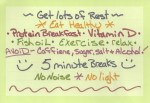
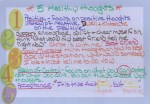
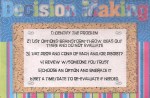
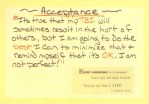
Cognitive Behavior Therapy is focused on the present rather than the past, meaning, I was seeing the therapist to rebuild new pathways of thinking that had been lost or damaged when the truck hit my head.  Pathways that would allow me to deal with life, be happy again, tell myself not to panic, and get rid of all those nasty, life threatening thoughts I was having.  Bringing me close to having as much of a normal daily life that I could.  The Doc and I soon figured out that I was not remembering from week to week each appointment.  So, she came up with the awesome idea of writing a “summary card” that explained our strategy or therapy for each appointment.  I would then take the card home, and to help me remember it, I would make a new one.  I would then place the cards all over the house, in my purse and in the car to be a constant reminder to work on building those new pathways of thinking.   I rewired my own brain!    It was my journey back to a functioning, make it thru the day me.    Below are a few, but most of my favorite’s are too personal to show you.

As you can see, I had to re-learn some pretty basic things.  I have a love/hate relationship with these 3×5 cards.  It was a good feeling looking thru them as I picked a few to share with you.  As I held the stack in my hands, many thoughts came to mind, but mostly a sense of accomplishment.  I am proud and happy to say that I am no longer on any anti-depressant.  They are not sure how they react with TBI survivors anyway, so why take a chance.  Thanks to my Dr. and working my thinking muscle, I have learned how to not need them.  I hated how numb they made me feel anyway.  Good bye and Good riddance.  Bad times still come and go and the depression may always be a part of me I have to deal with.  It’s a daily fight, I may not win the war, but I win many battles now.  When the bad days come, I know exactly what to do to get thru them. (If I forget, it’s on a card!) My depression and damaged cognitive thinking from the accident can no longer control me, I control it, I’m in charge.  There are no words to explain how good that makes me feel, and no words for how it changed my life from one I wanted to give up on to one that I will never give up on. 

I saw Dr. Frazier for about a year and a half.  I still make an occasional appointment when I can’t figure things out on my own.  I should see her more than I do, but money and wanting to move onto another therapy prevent me from seeing her.  She ended up seeing my whole family to help us deal with my cognitive problems and teach my family strategies to help them and myself how to deal with it.  TBI affects the whole family.  My family loves her.  So do I.  Thanks Dr. Frazier.  You became a good friend.  We accomplished a lot together. 

I realize that where I am now, is due to all the people who helped me get here, wherever that  is.

“Even though it is possible that individuals with TBI and depression may warrant different approaches to treatment than the general population with depression, there were only two studies of treatment in this population,” co-author Melissa McPheeters, co-director of the Vanderbilt Evidence-based Practice Center, said in the news release.

“It’s unacceptable, with so many people sustaining TBIs — both in combat and civilian life — that we know so little about treating depression in this population,” she added. (taken from Healthday, Tuesday April 19th, 2011).

“Take this sinking boat and point it home………….raise your hopeful voice, you have a choice”  Falling Slowly by Glen Hansard 

Nine more

•March 1, 2011 • 4 Comments

I woke up this morning and lay in bed.  I hit the snooze button on my cell phone a couple of times.  Trying to wake up, I made myself get out of bed.  Gotta make breakfast for Dan and Katie.  I headed out to the kitchen in a dizzy, sleepy fog.  Dan has my tea water hot for me.  That makes me smile.  I brew my tea and start breakfast.  Then Dan, hearing  that I am up, comes from the den to the kitchen.  He wraps his arms around me.  We tell each other good morning,  adding a big gooey kiss.  The kind that brings many reactions from our kids if they happen to be watching.  A moment I stop and fully enjoy everyday.  Then Dan whispers in my ear,  “Happy Anniversary”.  Oh!  Yes!  It is my anniversary.  Not the one you are thinking, not our wedding day, but the car accident anniversary.  Nine years ago today.  I died and was brought back to life.  It deserves celebrating.  It could have turned out so differently, but it didn’t.  So we have learned to cherish each day more that we have with each other.   So incredible to be able to hear those words.  They sound all the more sweeter knowing I may not have been here.  It stops me in my tracks and I pause to relish the moment.  I am amazed at all the emotions those words bring up and mean to me.   A good enough reason for me, to remember to cherish each day I have with my family and friends.   We look at a lot of things differently now.  Some things matter, some things don’t.  Experiences like ours, nine years ago, have a way of setting your priorities straight really quickly.

I feel very blessed to have had nine more years.  More to be with my best friend Dan,  more to be a mother to my children and watch them grow into the awesome, amazing people they have become.  Nine more to be a whole family.  All members present.  Nine years more to make new friends, cherish old friendships and re-kindle some lost.  Nine more to go, do and experience.  Nine more to wake up and look out the window and enjoy the day and just be.  Nine more.

Some years we celebrated, some years we stayed home.  Some years we cried, some years we reflected.  One year we were too scared to go anywhere.  What if it all happened again?  One year we just felt like we wanted to forget it and move on and one year we did forget.  Some years we get phone calls or messages.  My favorite,  a box of goodies, sent from a friend, that exploded with confetti when we opened it.  Life is good,  and should be celebrated with exploding confetti every chance you get.  Especially if it’s a second chance.  Also included in the box was  a little plaster sign quoting,  “and they lived happily ever after”.   It’s hung where it will remind us to live happily ever after.

This year Dan and I spent a lot of time reflecting on the miracles that happened that night.  The miracle that I was brought back to life, the miracle that at the last-minute they didn’t have to remove part of my skull like they did recently with Gabrielle Giffords.  The miracle of my little children with hands clasped in prayer in the emergency room begging God to let their mommy be ok.  The miracle of friends and family showing up in the middle of the night to support us. The miracle of out pouring of help, love and prayer for months/years after. 

What would you do differently if you got a second chance?  Slow down?  Speed up? Enjoy that  kiss more?  Listen, I mean really listen to your spouse and kids?  Spend less time on menial things and make most days count for more?  Volunteer?  Give more?  Take less?  Simplify?  Find meaning?  Watch a sunset or sunrise.  Argue less?  Forgive more?  Enjoy life more?  So do it.  What ever it is.  Do it now.  Live happily ever after, now.  We are.  It’s easy.  Try it.   Add some exploding confetti while your’e at it.  I dare you.

…………and they lived happily ever after.

non salutem, sed medicinalem, non autem decet……..

•February 11, 2011 • 6 Comments

March 1st, 2002, the day of the car accident was pretty much the worst day of my life, or so I thought. There was another one  eight years around the corner.  A day that brought it all up and out into the open again.  I guess if you don’t deal with things the first time, it will rear its ugly head till it gets attention. This time I chopped its head off.

A couple of years after the  accident, we were living in Utah, and Dan and I felt I was doing well enough to go back to work. I would never be the same after my accident and some odd things still hung around but for the most part we thought it was time for life to go on. We thought that it would be good for me and was our answer to get out me out of bed and out of the house. Time to quit eating Bon Bon’s and watching soap opera’s. (Ya, those of you who know me well know I would NEVER watch a soap. Even if you held a knife to my throat.). The Dr. I was seeing at the time agreed and said I could try part-time and see how I did.   I started out  filling in at a Dentist office for a couple of years and seemed to do pretty well. I had to have a lot of help remembering things and was very tired after work. I was still sleeping a lot during my days off and dealing with some pain that just wouldn’t go away and I had these incredible daily headaches.  But I just kept going.  Other than that, things seemed to go fine. My Boss even bought me a special assistant chair to help me with my back pain.  I was excited to be moving forward again.

Soon I was working full-time and it was only a few months later that things started to fall apart again. I went to a few Dr.’s trying to figure out what was wrong. Why couldn’t I handle a normal working day like everyone else? They all said that I just needed an antidepressant and things would be fine. Oh, how I would like to tell them where to shove those pills. Nothing like covering up your symptoms with another pill. They even offered me morphine once. So, now they wanted to cover up my symptoms and make me addicted and unaware of my days. A wife and mom and health care worker in a morphine fog was just what we all needed! No thanks!

Things went from bad to worse. Working was such an overload for my brain that most days I did not remember driving home the 20 miles it took to do my commute. When I did get home I rarely ate and usually went straight to bed. Dan was the mom, wife and dad. He went to work every day, then cooked and did homework and handled the kids because I couldn’t. I was at major break down point. How did it get this bad? I have no idea. I never realized how bad things actually were until recently.  As Dan and I look back, we both wonder why I kept working. I guess because we had bills and kids going to college and it’s just what you do. In the back of our minds we did wonder how long I would last.  Why didn’t I just quit you ask? Because I am NOT a quitter! So we just ignored it, you know, avoid the inevitable. Silly us. Thank goodness Dan had the smarts to pay off all of our debt with my paychecks so that when the day came we would not have to much of a lifestyle change.

I got thru my days on autopilot. I was generally in so much pain that I swallowed 800mg ibuprofen every 4 hours. Unfortunately they didn’t even begin to numb the pain.  I couldn’t sit down on any chairs because it hurt to bad. I had a big round exercise ball that I would sit on at home. I would rock back and forth all the way home from work because my back and head hurt. I was incredibly tired all the time. I had the hardest time completing the simplest tasks and it took me a long time to accomplish them. My head felt like it was spinning all the time. I could not follow instructions or conversations. I would walk away in the middle of talking to co-workers or my boss, and family, usually with an angry expression on my face because I was so overloaded and confused. They all thought I was mad all the time. Not a good way to make friends and keep relationships was it. Conversations were mostly just annoying to me. Nothing was making sense any longer. I had a really hard time getting along with my family, co-workers and friends. I quit going places and pushed away anyone who tried to get close.  That was and sometimes still is, a very hard, big piece of me to swallow.  I was also dealing with an incredible amount of anxiety and post traumatic stress syndrome. Most nights I would lay in bed exhausted but my anxiety wouldn’t let me sleep. I would lay awake and my whole body trembled and shook uncontrollably. Visions of death and destruction always in my head. When I finally fell asleep, I would wake with a start in terror of something bad happening. In the morning I would wake up dizzy and nauseated and rush to work where I would run to the bathroom and try not to throw up. I gave up trying to eat anything at all for breakfast. To top it all off, my happy was broken. I hadn’t felt a single, simple, glimmer of happiness inside in, what felt like to me, forever.  Really, how long could I go on this way without crashing. I wasn’t far. Obvious to all but me I guess. I didn’t want to go on like this, I couldn’t. 

I finally realized that nobody was magically going to help me. duh! So I started calling around and interviewing Dr.’s and their staff about how they would help me. Please help me. I was finished with Dr’s that just wanted to give me pills. I had been given lots of cocktails of pills and when I didn’t feel they would work I would just flush them all down the toilet and give up, much to the Dr.’s and Dan’s frustration. I never want to go that direction again. After about six months I found a Dr. , one that seemed capable of treating someone who had been through what I had been. He agreed with me that Morphine and antidepressants werent the answer. I instantly liked this guy! He was very knowledgeable with car accident survivors and symptoms they had afterwards. Within three months Dr. Taylor had sent me to a couple of specialists and we had a diagnosis. Finally! Eight years  late, but at least we were finally getting somewhere. We were on the right path now. Dr. Taylor literally saved my life. He was an answer to my prayers. I told him so. He did something many other Dr.s couldn’t. But I was the one who finally took charge of my health care to get some answers and that’s when we got the right ones. After all, Dr.’s are human right?  Well most of them. I have five that rate really high in my book now. You sure can find out quick who loves their job and who doesn’t.

Now its January of 2009.   All the reports were in from the specialists. The neuropsychologist tested me for two days and $2000! The Hearing and Balance Center tested me for a whole day, plus therapy appointments. We spent 3 hours in the Thoracic Surgeons office.  After being poked, prodded, examined, x-rayed, MRI-ed, CT-scanned, spun around, goggled, tested and turned inside out, I was finally diagnosed with; Chronic Fatigue. Severe Chronic Pain. I guessed that one.  A Moderate/Severe Traumatic Brain injury, this one took me totally off guard, a paralyzed diaphragm on the right side, ah hah! We also discovered nerve damage in my eye/brain, not sure wich, that caused constant nausea, dizziness and a feeling like I was on a rollercoaster even when I wasn’t, I was very surprised by this one too, but it made a lot of sense, and yes, sometimes I walk like I’m drunk and run into walls.  I was severely depressed and had very high anxiety and Post Traumatic Stress Disorder. Eight years after my car accident I was officially figured out. I thought that’s what I wanted. Boy, was I wrong. Never mind. Take it back please. I don’t like what I got, can I trade it in for something else? Where’s that damn receipt?

It was time to discuss all this with Dr. Taylor, my general physician. We went over all the results. He gave me my final Diagnosis. It was a day that would change my life forever, again. Oh, really! Not again. Here is was. The worst day of my life,  all over again.  Somebody wake me up. This is the worst nightmare yet. Here it comes……   The Dr. and Dan and I went over all the reports and he looked at me and said. “well, you’re done. You’re done working, you can no longer do your job”. I was officially disabled. What! There is that word. Disabled. Just so you know, I hated that word and would not use it to ever describe me. Why did it feel like a death sentence? Oh, because to me, it was.  

Recovery again. So with an order to quit work and go directly to therapy, do not pass go and do not collect $200, I sat down with Dan to make a plan of action. I would quit work immediatly and follow the Dr.s orders. My co-workers and boss were really not dealing well with any of this or the mandatory breaks one Dr. insisted I took every hour to give my brain a break. No body else was able to take over. It caused a lot of extra work for everyone else. Plus, to add to the fun, I was accused of taking advantage of my breaks and people whispered about me. Like I wouldn’t know. I figured they would be happy I was quitting. So I did. Just like the Dr. told me too. What choice did I have. The end, finished, done. No more career for me. I was actually numb about all this. I did cry a lot though, wow, really a lot. My last day at work, after everyone left, I sat down in one of the patient chairs, brought my knees to my chest and cried harder than I have ever cried before. I cried for over a full miserable hour. I cried until there was nothing left. Empty. Finally, I got up, grabbed my things and shut off the lights and locked the door for the last time. I was good at this, really good.  What was I going to do now. I don’t remember the drive home. The days that followed were such a blur. This was the lowest point in my life.  I was done. I didn’t want to live anymore. I was seriously considering taking my own life. So much so, that I had my Psychologist on speed dial and there were many days that Dan had to stay home and watch me so I didn’t complete the dirty deed. Never thought I would see myself at that point. I never could understand how people got to the point of not wanting to go on.  Now I do.  I really, really do.  Not really sure what kept me going.  I am not and never will be ashamed of talking/writing about depression. It needs to be out in the open more.  Screw the status quo! 

I remember begging God to bring that happiness back into my life. I couldn’t get through all this without it. The same God that promised me I would get through this, well, I hated him now. Because, I wasn’t getting through this.  Some one once told me that when you are buried so deeply by depression and anxiety that even God can’t hear your screams for help. I didn’t believe that for a second. But now I do. I felt like I was on my own. I had to dig myself out of this hole that I found myself in after not taking care of myself and not being correctly diagnosed, so he could hear me. I had to let him in again. I had to reach deep inside and find that teeny, tiny glimmer of hope and faith I had left and make it grow. Nobody was going to make this better for me. I would have lots of support from family and friends but I had to make the first move. One incredibly hard step at a time. I remember my feet feeling like they were planted in cement blocks for months, and on really bad days, feeling like my whole body was. At least I was finally, correctly diagnosed and on the right path, but I had to hit total, dark, end of my rope, no faith or hope in site, my life is over, only functioning on autopilot , rock hard bottom, to get it all figured out. Sounds like a ball huh. Our headbangers ball.

What now? I had just been sucked into the life of a disabled person, ready or not. Here I am. I was feeling very sorry for myself. Not exactly part of our hopes and dreams now is it? I sank into my bed and only came out to go to therapy because I knew eventually, hopefully, it would help. I hope. Bed, therapy, depression and pain.  All my therapy was going to cost around $800 a month, plus we were still paying for all the testing and I just had to quit my job. This was way beyond overwhelming for me. I had no idea how I was going to accomplish all I needed too. That’s all I was for most of 2009.  A disabled blob of existence. Ya, I know, I hear you. Yes, I was feeling very sorry for myself, thank you very much. I didn’t have the energy to do anything else.

Slowly, and very slowly I started to feel a little better. I filled my days with taking care of my self. Rebuilding the relationships that had been damaged and put on hold. I had to learn to manage my new life with a Traumatic Brain Injury along with a few other additions like the chronic pain, anxiety and depression.  

First on my list was going to Cognitive therapy. I had to get a grip around my depression. I had to rebuild new pathways of thinking in my brain and go around the ones that were broken. I also had to deal with my anxiety and Post Traumatic Stress disorder. I am very happy to say that there are NO antidepressants in my life anymore. My therapist taught me to deal with it on my own. By my own choice. Because I don’t like how they make me feel. Hard, yes, a very hard amazing journey, but I did it! I had to retrain myself to have happy thoughts. It’s a common problem among TBI survivors. It’s amazing what you can teach the brain to do. 

Another was Balance therapy, I had to build new pathways of balance in my brain so I didn’t feel dizzy and nauseated. This almost immediately took away the morning sickness I had from the beginning and took away that rollercoaster ride feeling I got whenever I rode in a car. (Dan was especially happy about this one because I quit freaking out in the car and taking all the spare oxygen hyperventilating!) There is now oxygen to spare, most of the time. Ok……still working on this one.

Speech and Hearing therapy was one of my favorites because it helped me to understand and be involved with conversations, plan my day, shop, read and understand books and following the plot in movies. It was like a curtain had been lifted and I could be involved in a normal life again. I could understand what people were saying to me and what I was reading! 

Physical therapy I did on my own at home by walking or using my total gym. It was physically and mentall very hard to push myself out of bed. I made myself exercise everyday that I could. First it was just walking a couple of miles and a light workout on my total gym. Now I can bike 6 miles on my dirt road. Work out for a full hour and a half on my Total Gym. I still don’t look anything like Chuck Norris or Christie Brinkley, but I’m trying. I can golf almost a nine holes without stopping and can hike my ass off for about 10 miles at a time. The hiking has been an amazing accomplishment for me. You see, when I begin to go up any incline at all I instantly feel like I can’t breathe due to my paralyzed diaphragm.  No therapy for this one. It’s not changing. I also have to concentrate extra hard on where I put my feet due to my balance problems and fight off dizziness that gets worse the closer I get to the top. So I stop after only a few feet. People would hike past us and get to the top and see us still going up on their way back. But that doesn’t discourage me.  I topped Mt. Naomi late last summer. I cried again. I am really a big baby now days. It was an emotional moment to say the least. Even tough old Dan had tears in his eyes. We were all very proud of my accomplishments.

I even changed my diet to a more brain healthy one and lost 20 lbs. No more caffiene, salt, alcohol or fat for me. Well….almost. Of course I am human and I screw that one up quite often.

I also started going to Vocational Rehab, they would pay for me to go back to school after a lot of red tape  to get the ball rolling. K, I was doing better. Maybe I can get through this. Even when the Dr. thwarted my efforts of going back to school by saying I wasn’t ready yet. It didn’t even phase me, well, maybe it did a little, but I didn’t let it stop the momentum I had going. I can put that one on hold for a while.

So I guess this was my second recovery. It’s been one hell of a ride. Here it is February and I can look back and know I worked my ass off to be who I am today, and I’m not done yet. It has taken me two full years just to get feeling better and functioning much better. I refuse to stay in bed and on the couch for the rest of my life.  Instead of going to school, I am now involved with advocate groups for TBI and am getting involved more with the disabled/TBI community and not hating that word so much. I also volunteer at our local Food Pantry every week.

I fought to get my happy back and you will often see me with a smile now. Not only on my face, but in my heart. I still fight with pain and the demons of depression, I still sleep alot, I will always struggle with the effects of my TBI and still need lots of rest and meditative breaks but not as often.  My work is not finished and as soon as I slack off my therapy or taking good care of myself I pay for it dearly. I have learned to manage my health and deal with what I have been given, most importantly embracing the new me. I think I am better than I was before. I am a work in progress and just very thankful I am still here to enjoy the ride.

This all reminds me of something Martin Luther wrote:

This life therefore, is not righteous, but growth in righteousness.

Not health, but healing. 

 Not being, but becoming.

Not rest, but exercise.

We are not yet what we shall be, but we are growing toward it.

The process is not yet finished, but it is going on.

This is not the end, but it is the road.

All does not yet gleam in glory, 

but all is being purified.

 -Martin Luther

So that is my story of Non salutem, Sed medicinalem, non autem decet- not health, but healing, not being, but becoming.

As I climbed into bed last night and pulled the covers over my shoulders, I breathed deep and inhaled the clean smell of my bed. A sweet mixture of laundry detergent, softener, lavender and me, and let out a big sigh and thought to myself  “what a good day!”  Something only a short time ago I could not do. I used to lay in bed trembling in a fearful, pain and anxiety filled state, unable to relax, sleep or even wonder at the day that was ending or the one to come. So for a time I lay in my bed and enjoyed the moment. Relishing in the fact that my happy was back, I fell promptly to sleep.

Unfair Treatment?

•February 9, 2011 • 3 Comments

What’s really sad is, along with stories similar to the one below, all our war vets who come home and are incorrectly diagnosed, if diagnosed at all. Then they have to go through huge amounts of red tape to get mediocre rehab. This country is so messed up sometimes. I am so blessed that I had good insurance when my accident happened and a community that cared enough to fill in where insurance wouldn’t pay. But that help didn’t last forever. My husband and I have paid so many bills for my care. We could have a much nicer home, (I am really wanting/needing new carpet :)more toys and a great vacation every year, and help our kids more with college, if we didn’t have all my medical bills. It’s a choice we happily make though. At least it’s a great tax deduction.

We responsibly choose to pay out the wazu for my care. But truthfully sometimes I would like to take that money and for once blow it on something totally irresponsible and fun. Actually…….maybe I will. I will keep you updated on that one!

The Frames, Falling Slowly

By JoNel Aleccia

Health writer

msnbc.com msnbc.com
updated 2/8/2011 8:44:36 AM ET 2011-02-08T13:44:36

A month after being shot in the head outside a Tucson supermarket, Arizona Rep. Gabrielle Giffords has settled into a premiere Houston brain rehabilitation center, where experts say she has begun the most arduous — and important — part of her recovery.

Family and staff have cut back on frequent updates of Giffords’ progress at TIRR Memorial Hermann hospital, saying they’ll report “important news” when it happens. What is clear, however, is that her care at one of the country’s top five rehab sites will be paid for through a federal workers compensation program, providing essentially unlimited time and money to help her regain cognitive, physical and social functions.

“What she’s needed, she’s gotten,” said Pia Carusone, Giffords’ chief of staff, who confirmed to msnbc.com that Giffords’ care after the Jan. 8 attack that killed six and injured 13 will be treated as a workplace injury.

But 284 miles away, in Anna, Texas, another gunshot brain injury victim has not been so fortunate.

Steven Jones, 18, has struggled to access rehabilitation care for four years, ever since he was shot in the face in 2006 by a neighbor boy messing around with a 9-millimeter handgun.

The bullet left Steven blind in his right eye, deaf in his right ear, with little function in his left arm and hand and difficulty walking. Now 18, he still has a 4-inch hole in his skull. His IQ dropped from 121 to 81 after doctors had to remove 40 percent of his brain, said his father, Randy Jones.

Steven has received some high-quality therapy, thanks to charity, at Pate Rehabilitation, a specialized brain injury center that normally charges up to $1,000 a day. The bulk of his care, however, has been provided by state Medicaid and other providers, whose resources — and expertise — were limited.

Two-thirds sent home with no further care
“They give you what you get,” said Randy Jones, 55, a high school history teacher and football coach who adopted Steven as a toddler along with his sister, Chely, now 14, from foster care. “Some of the rehab we did was whatever we could. It’s like going to a restaurant. If you have $5, this is what you can order for $5.”

Unlike Giffords, Steven’s access to the early, intensive therapy that doctors now believe is key to the fullest recovery was limited and inconsistent. What’s worse, say brain injury advocates, is that he is not alone.

“Gabrielle Giffords is likely to receive ideal care because of who she is,” said Mark Ashley, chairman emeritus of the Brain Injury Association of America, based in Vienna, Va. “You and I would not be in the same situation.”

About 1.7 million people suffer traumatic brain injuries every year in the U.S., according to government statistics, with about a quarter resulting in moderate to severe cases. Of the 275,000 hospitalized for brain injuries every year, about two-thirds are sent home with no further medical treatment, Ashley said.

Of those who do receive care, it’s likely to be far less than they need — or expect. Most people with private or public health insurance assume that they’re covered for traumatic injury and the rehabilitation to recover from it — but they’re wrong, Ashley said.

“We estimate that fewer than 4 percent of patients who need this care actually get it,” said Ashley, who is co-founder and president of the Centre for Neuro Skills, which operates centers in California and Texas.  “In the last several years, more policies have been written that exclude rehabilitation altogether.”

Giffords is expected to remain for an unknown period of time, but at least several weeks, at TIRR Memorial Hermann, where doctors say she is receiving a “tailored and comprehensive” rehabilitation plan.

In the hospital, she’s getting six hours of therapy a day most days, although the schedule may be slightly lighter on weekends, said Carusone, Giffords’ chief of staff. Once released, she’s likely to receive unlimited outpatient care, experts estimated.

In contrast, Steven Jones has received a hodge-podge of rehabilitation treatment marked by delays and inconsistent quality. In 2006 and 2007, right after his injury, he received about three months of intensive care at Pate Rehabilitation, thanks to the agency’s scholarship program, said Pate Senior Vice President Jane Boutte.

And he’s receiving another three months of intensive, targeted care at Pate now through April under short-term care provided by a cash-strapped state program.

In between, Steven spent three years with limited therapy through state Medicaid providers who treated him, at most, for three hours a day, two days a week. Even that care was often interrupted by paperwork delays and other bureaucracy, said his mother, Elaine Jones, 50, also a high school teacher.

“You’re at their mercy for everything,” said Elaine Jones, who has hired neighbors, students and other teenagers to stimulate and supervise Steven, who still requires constant attention.

With that help, Steven has made some progress. He learned to walk and talk again, albeit with difficulty, said Kier Brison, clinical director at Pate. He returned to high school part-time and eventually graduated, and has taken an English class at a local junior college.

He’s a “more mellow” teenager now than he was before his injury, less argumentative and more compassionate with his parents, said Randy Jones. Damage to his frontal lobe has subdued his emotions: “He doesn’t really get mad.”

He’s a funny young man whose personality comes alive on the computer. His MySpace page includes references to “craterhead Steven” and the tag line: “so i’m not bullet proof?” Family friends gave him a job 10 hours a week at a local fast-food place, cleaning windows and making onion rings — with one hand.

But with better care, it’s possible Steven could have improved even more. Once an aspiring musician who befriended stray dogs and was active in his church, Steven can’t do any of that now. He has few hobbies or activities, spending most of his time at home, where he lives with his parents and sister. Steven has a dream of sharing an apartment with a friend someday, but his mother doubts that will happen.

“Steven is now a prisoner in his body and in our house,” she says. “He cannot be by himself.”

The trouble was not with Steven’s medical care, Elaine Jones notes. Surgeons and others at Parkland Health and Hospital System and the Baylor Health Care System in Dallas gave him topnotch care during the height of the crisis.

“Once you’re no longer an inpatient and you become an outpatient, that’s when your world begins to rock,” Elaine Jones said.

Nationwide, costs for inpatient acute rehabilitation average at least $1,600 a day, according to a 2003 analysis of brain injury patients published in the journal Archives of Physical Medicine and Rehabilitation. They follow intensive care costs that can range from $150,000 to $200,000 a week, plus other medical expenses. Outpatient care can run from $350 to $1,000 a day, depending on the level of treatment. All told, care for a traumatic brain injury can easily approach several hundred thousand dollars very quickly, experts estimate.

Giffords covered under federal workers comp
Because Giffords’ injury occurred while she was on the job, it has been filed as a claim under the Federal Employees Compensation Act, according to Carusone, who said staffers are taking care of the paperwork.

Under FECA, everything is covered, said Edward Daniels, a Willow Park, Texas, lawyer with 30 years of experience administering and defending FECA claims.

“There’s no time limit, there’s no dollar amount,” said Daniels. “Whatever the cost of it is, it’s paid at 100 percent.” In addition, Giffords will be compensated for most of her lost wages, he said.

If she had not been working when she was shot, her injuries would have been covered by the Federal Employees Health Benefit program and likely by her husband, Mark Kelly’s, benefits as an astronaut. Carusone, Giffords’ chief of staff, declined to specify which of several federal insurance plans Giffords chose.

Still, for many ordinary Americans, care can be much more limited. While Giffords could receive months of inpatient rehabilitation, the nationwide average is just 16.6 days, Ashley said. 

After leaving TIRR Memorial Hermann, Giffords likely will receive as much outpatient care as she needs, for as long as she needs it. By contrast, many insurance plans limit coverage to 20 to 24 outpatient visits per year, or one session every other week.

Retraining a badly injured brain is a delicate process that takes time and expertise, Ashley said. Targeted, individualized therapy is the only way to stimulate the brain to reset itself and rebuild ravaged neural connections.

“We don’t have a pill or surgery that corrects this very complex condition,” he said. “The problem is that rehabilitation has not been viewed as medicine, but, in fact, it is the single most important medicine we have to treat the disease of brain injury.”

‘If we don’t stimulate the brain, it doesn’t respond’
Denying patients rehabilitation coverage essentially denies them recovery. “If we don’t stimulate the brain, it doesn’t respond,” Ashley added.

Health insurers protest that characterization. Treatment payment is guided by research and medical indication, and by the level of coverage that employers and patients pay for, said Susan Pisano, spokeswoman for America’s Health Insurance Plans.

“A patient or a patient’s family may believe more services may be provided than actually are,” said Pisano, whose agency represents 1,300 health insurance companies that cover more than 200 million Americans.

But Boutte, the Pate executive, said that insurance companies themselves define and decide what’s “medically necessary,” sometimes defying the advice of doctors and therapists. They often use what clinicians regard as arbitrary guidelines for sending patients to lower, less-expensive levels of care or to deny care at all.

“We have a patient right now, an inpatient, and the (insurance) case manager said he’s walking 1,000 feet, he really can go to day treatment,” she said. “He can’t walk and find his way out of a paper bag, but he can walk.”

In Steven Jones’ case, his access to rehabilitation was limited by the Medicaid system and other state programs, where resources vary widely. As a foster child, he was eligible to be covered by Medicaid.

His parents could have added him to the insurance provided by their jobs as educators, but after Steven’s injury, Randy Jones says he’s glad they didn’t.

“Medicaid paid for just about everything as far as his injury factor was concerned,” Randy Jones said. “Anybody else would have had to pay out $50,000 to $60,000.”

Even if they had chosen to use their health insurance for Steven’s rehab, it wouldn’t have covered the costs. “It was thousands of dollars a month and schoolteachers can’t do it,” Randy Jones said.

‘It drives all of us crazy’
The result? Steven has not improved much since he left Pate in 2007, said Kier Bison, neuro-psychologist and clinical director.

“He still has some issues with the right side of his body that he needs work on. He still has issues with information processing, general overall cognitive skills,” she said.

If he’d had better care for longer, care similar to Giffords’, would it have made a difference?

“Oh, that’s huge,” said Bison. “Especially for someone like Steven, he’s young. The younger you are, the better you are able to progress.

“But if he were getting the higher level care like the congresswoman’s, he might not even require a caregiver — and he still does.”

For Bison and others who work with brain-injured people, the frustration is fierce when patients are turned away because of cost. Many former clients wind up in nursing homes, drugged into compliance because the centers don’t have the skills to treat brain injuries. Others wind up in jail or on the streets, she said.

Randy and Elaine Jones know that more intensive care might have made a difference for their tall, sweet-tempered son. They know that if they’d had more resources, Steven could have had the kind of focused, intensive treatment Giffords is getting. But they also know that’s the way the world works.

“She is probably going to receive immediate care at 100 percent to get her up and going, whereas us, we have to take it when we get it,” Elaine Jones said. “That breaks your heart because it’s your kid. But, as unfair as it is, I get it.”

The Joneses say they’ll continue to fight for Steven’s care in hopes that he’ll be able to pursue a fulfilling life at whatever level he can. They hope that Giffords’ recovery from the horrific assault helps raise awareness of the struggles of less-prominent brain injury victims.

But when Randy Jones thinks of everything that could have gone differently, he doesn’t dwell on disparities in therapy. He thinks all the way back to the neighbor boy with the loaded gun.

“We really don’t know the realization of what Steven could have been or would have done,” he said. “I really thought he was going to be able to do some neat things in life, but it doesn’t look like he’ll be able to fulfill those things.”

 
GentleKindness

Healing Truth Artistry

Living to thrive

My mission in life is not merely survive but to thrive; and to do so with some passion, some compassion, some humor, and some style. ~ maya angelou

our headbangers ball

my life with a brain injury

Broken Brain - Brilliant Mind

TBI S-O-S! Restoring a Sense-Of-Self after Brain Injury and Concussion

this is... The Neighborhood

the Story within the Story

Threads of Red Blog

I will be sharing thoughts, poetry, short stories, and notes from some of my favorite books.

WordPress.com

WordPress.com is the best place for your personal blog or business site.

Myarteasel's Blog

Just another WordPress.com site

Brain Health Resources

An Information Resource for Brain Injury Survivors!

Mindsight

from COVD.org - Exploring Vision, Health, and Learning